
Home to around 4% of the world’s biodiversity, it’s no wonder that Costa Rica is a top destination for animal lovers.
The best places to see wildlife in Costa Rica are Osa Peninsula, Tortuguero, Manuel Antonio, Uvita, Puerto Viejo, Cahuita, Gandoca Manzanillo, Palo Verde National Park, Sierpe, Sarapiqui, Monteverde, Caño Negro Wildlife Refuge, Corcovado National Park and La Fortuna.
If you want to see Costa Rica wildlife, we’ll tell you where and when to see wildlife such as monkeys, toucans, sloths and more in this post.
This post has affiliate links which we may earn a small commission from if you choose to purchase, at no extra cost to you. Listed prices are quoted in USD and are estimates. More info: Disclosure
Humpback Whales in Costa Rica
Humpback whales are the most common whales in Costa Rica because both the Antarctica and Alaska humpback whales overlap for a period of time during their migration.
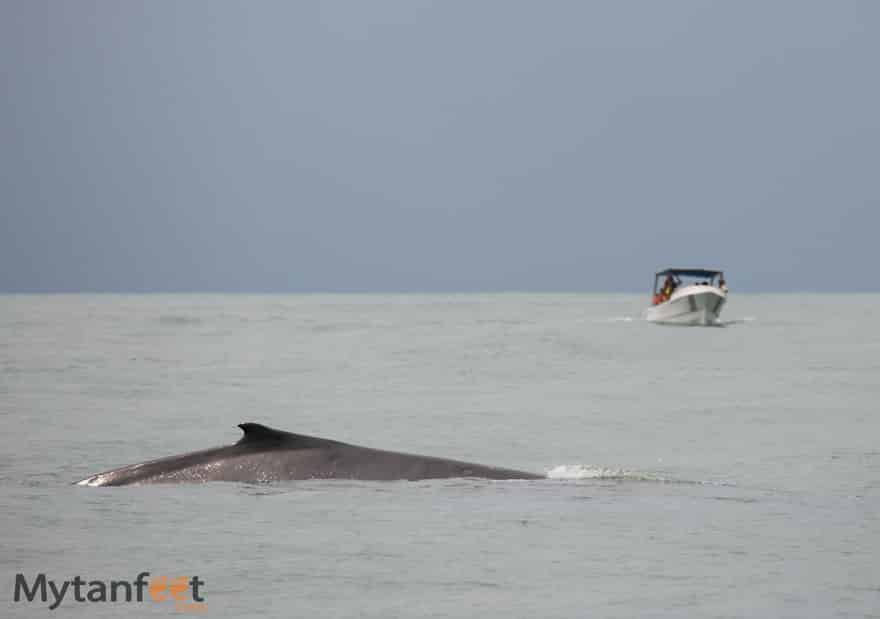
This means Costa Rica has one of the longest humpback whale seasons in the world!
Best time to see whales in Costa Rica
Antarctica humpback whales – July to October
California humpback whales – December to end of March
North Atlantic humpback whales – December to March
August and September are the best months to see humpback whales in Costa Rica, particularly in the North and South Pacific.
Best places to see whales in Costa Rica
- Drake Bay: South Puntarenas, northern region of the Osa Peninsula. Drake Bay has excellent whale watching opportunities.
- Marino Ballena National Park: In Uvita. There’s a reason why this is called the Whale National Park, this is the best place to see humpback whales! In August and September, there are nearly daily sightings.
- Gulf of Papagayo: This area is best to see the Antarctica humpback whales in February, March, July, August and September.
You can also see humpback whales in Manuel Antonio, Gulf of Nicoya and Golfo Dolce.
Costa Rica Dolphins
In Costa Rica, you can see spotted and bottlenose dolphins. They love to play in the waves of the boat so it is very possible to see them on catamaran or sailing cruises.
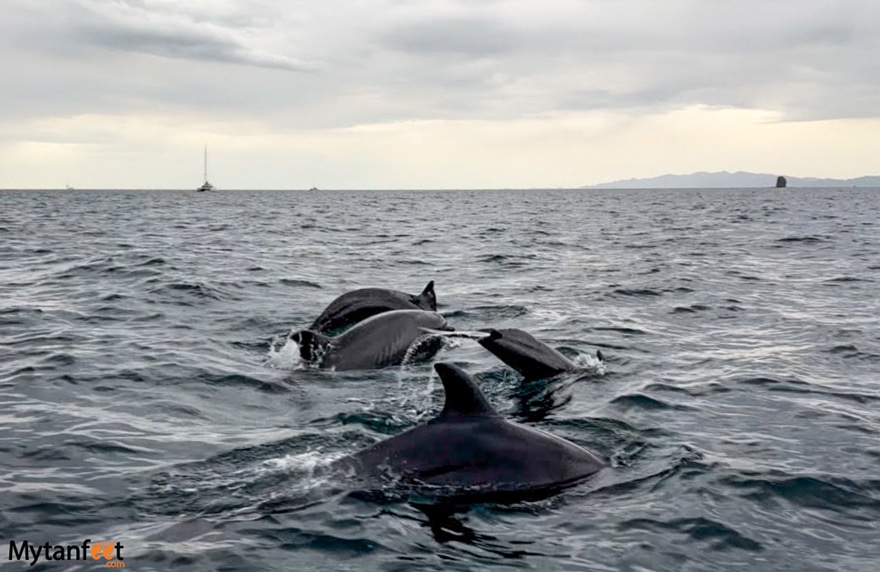
Costa Rica does not allow swimming with dolphins or taking photos with dolphins like they do in Mexico or Bahamas.
Best time for dolphins in Costa Rica
Year round for bottle nose and spotted.
Best place to see dolphins in Costa Rica
Dolphins can be seen throughout the entire Pacific coast. They are especially common to see in the Golfo Dolce. On the Caribbean side, you have a chance to see bottlenose dolphins near Limon.
Many tours combine whale and dolphin watching since the two are commonly seen in the same waters. Some places are Osa Peninsula, Drake Bay, Flamingo, Manuel Antonio and Puerto Viejo.
We have seen several times groups of bottlenose dolphins in the Gulf of Papagayo.
Costa Rica Turtles
Costa Rica is an extremely important place for sea turtles as several turtle species nest on the beaches of both coasts.
There are several different species of turtles in Costa Rica, such as the leatherback, Olive Ridley and Atlantic Ridley sea turtle. Many of them are critically endangered.
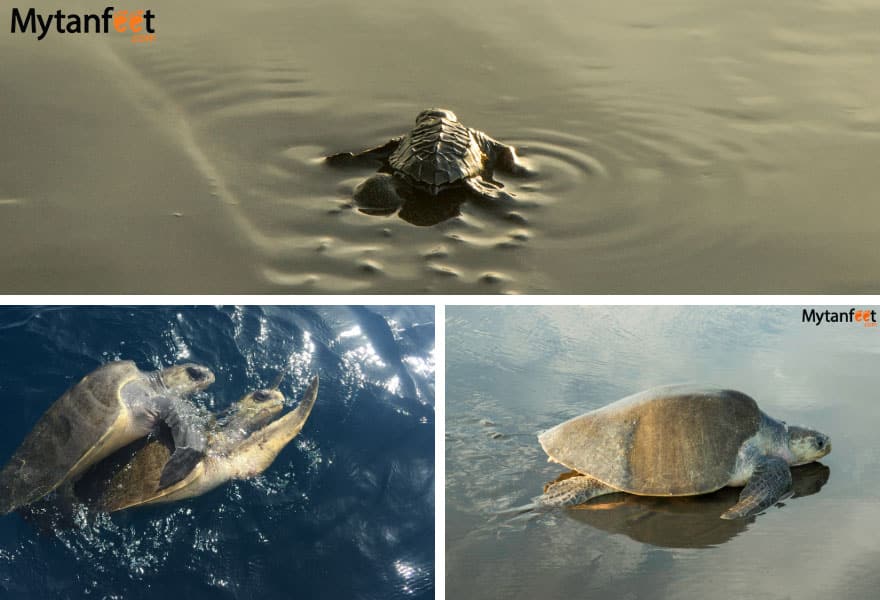
Best time to see sea turtles in Costa Rica
You can see sea turtles on both the Caribbean and Pacific. They nest at different times of the year.
Olive Ridley sea turtles: rainy season months nesting season
Leatherback sea turtles – February to July
Green sea turtles: July to October nesting season in Tortuguero
The best time of year to see turtles in Costa Rica are the rainy season months, July – December. This is when the mass gatherings are the most intense.
Best places to see sea turtles in Costa Rica
- Las Baulas National Park: This national park was established in 1990 to protect leatherback turtles from poachers. You can see nesting turtles on Playa Grande in Oct – May. Unfortunately the number of nesting leatherback turtles decrease greatly each year but it’s still an important turtle nesting site.
- Tortuguero: This national park in the Northern Caribbean is one of the best places to see turtles in Costa Rica. Additionally, it is one of the most important endangered green turtle nesting sites in the Western Hemisphere. Turtles come here from the months of July to October to lay their eggs. Best month is September to see nesting turtles.
- Santa Rosa National Park: One of the beaches in the national park, Playa Nancite, is one of the few places in the world to experience “arribadas” or the mass nesting of turtles. However, being inside a national park with strict land access, only researchers/biologists with permits may visit this beach.
- Ostional Wildlife Refuge: Ostional is the best place to see turtles in Costa Rica because of the many mass arribadas and easy accessibility. This is the best place to see the arribada in Costa Rica. The local town has their own guide association to take people into the refuge. Best time is July – December, biggest months are October and November.
- Gulf of Papagayo: It is common during July – September to see turtles mating in the water in the Gulf of Papagayo.
- Caño Island: During most of the year, it is common to see turtles, particularly juveniles at Caño Island Biological Reserve. You can see them while snorkeling.
Other Places to See Turtles
- Osa Peninsula and Corcovado: Many of the beaches are nesting sites for 3 species of turtles.
- Montezuma: The Atlantic Riley turtle lays their eggs on this beach. The local community does baby sea turtle releases in February.
- Gandoca Manzanillo Wildlife Refuge: Located on the south Caribbean coast. Leatherback turtles nest here from March – May.
- Tambor Bay: Playa Tambor is home to Olive Ridley Sea turtles.
- Playa Hermosa Wildlife Refuge: Although this is a popular surfing beach, it’s also part of the Playa Hermosa Wildlife Refuge. During rainy season, up to 40 turtles nest per night.
Arribadas
The best time to see nesting turtles is during arribadas (synchronized mass gathering of turtles).
It is appropriately named because during this period of time (usually the last quarter moon in rainy season) sees up to tens of thousands of turtles coming to the beach to nest at once. They come 24/7, even during the day!
Most importantly, this happens in only a handful of places in the world, with 2 of them in Costa Rica: Ostional and Playa Nancite for the Olive Ridley Sea Turtles.
Arribadas occur during Costa Rica’s rainy season, June – December. The best months are September, October and November.
Costa Rica Sloths
Everyone wants to see a sloth in Costa Rica.! However, they can be hard to see because they camouflage extremely well and are not found in all parts of the country.
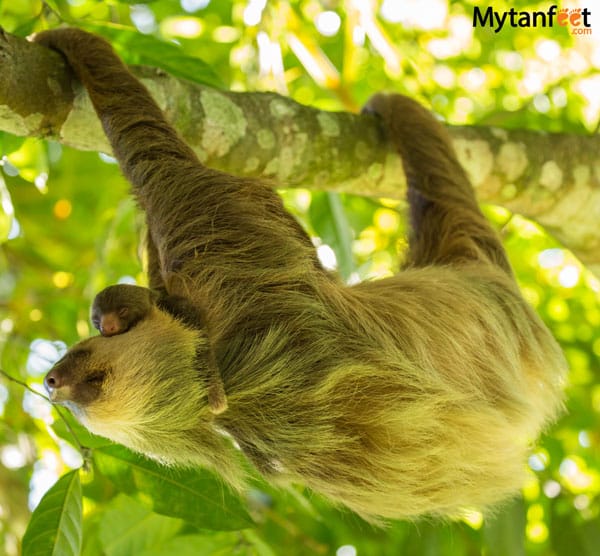
There are two species of sloths in Costa Rica: the two and three fingered sloth.
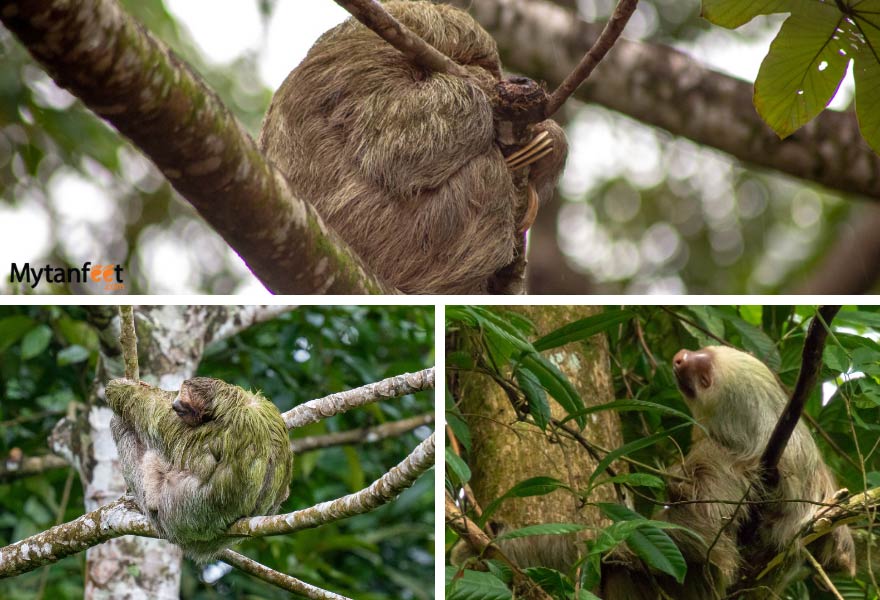
Best time to see sloths in Costa Rica
All year long.
Best places to see sloths in Costa Rica
The best places in Costa Rica to see sloths are Manuel Antonio, Puerto Viejo, Tortuguero, Dominical, Uvita, La Fortuna, Bijagua and the Osa Peninsula.
They are quite abundant in the humid rainforest areas since they always have food.
Because of this, they are not found on the Guanacaste coast or the Nicoya Peninsula because this is dry tropical forest.
If you are staying at the Guanacaste beach towns or in the Nicoya Peninsula (Tamarindo/Coco/Samara/Montezuma/Mal Pais/Santa Teresa) and want to see a sloth, you will need to travel to the rainforest like Bijagua or La Fortuna or visit an animal sanctuary.
From Tamarindo/Flamingo/Conchal/Coco, book the Guanacaste rainforest sloth tour here!
Animal rescue centers or sanctuaries where you can see sloths are Jaguar Rescue Center, Toucan Rescue Ranch, Alturas Wildlife Sanctuary, Kids Saving the Rainforest, Selvatura Park, Springs Resort, La Paz Waterfall Gardens and Diamante Eco Adventure Park.
These centers rehabilitate and rescue various Costa Rica wildlife like birds, iguanas and mammals.
Many sloths become permanent residents due to disabilities or have been kept in captivity too long/all their life.
The sanctuaries usually only have sloths if they have any injured sloths or those in rehabilitation.
No reputable animal rescue center or tourist attraction will allow visitors to touch or hold sloths, or physically manipulate them to be in better viewing locations.
Costa Rica Monkeys
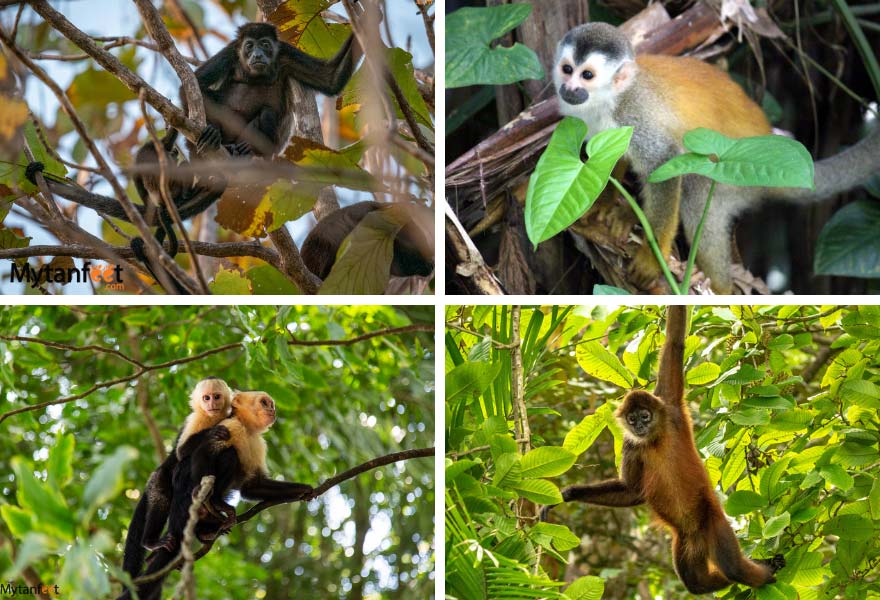
Four different species of monkeys are in Costa Rica: White-face Capuchin monkeys, Howler monkeys, Squirrel monkeys and Spider monkeys.
All monkeys except the white face are endangered or threatened in Costa Rica.
Best time to see monkeys in Costa Rica
All year round.
Best places to see monkeys in Costa Rica
The Osa Peninsula is the only place where you can see all four species of monkeys in the same place.
Squirrel monkeys are only found in the Southern Pacific part of Costa Rica such as Corcovado and Manuel Antonio. Howlers and white face monkeys can be seen all throughout Costa Rica.
Spider monkeys are common in the Osa Peninsula but can also be seen in Rincon de la Vieja National Park in Guanacaste, the Caribbean coast, Caño Negro and Children’s Eternal Rainforest.
You can read more about monkeys in Costa Rica.
Costa Rica Birds
With over 800 species of birds, Costa Rica is an excellent place for birdwatchers.
You can find 6 types of toucans, 18 types of parrots, 57 types of hummingbirds and much more!
Undoubtedly, birdwatching in Costa Rica ranks as one of the best in the world.
Toucans
The 6 types of toucans in Costa Rica are the Black Mandibled, Keel-billed, Emerald Toucanet, Collarred Aracari, Fiery Aracari and Yellow-eared.
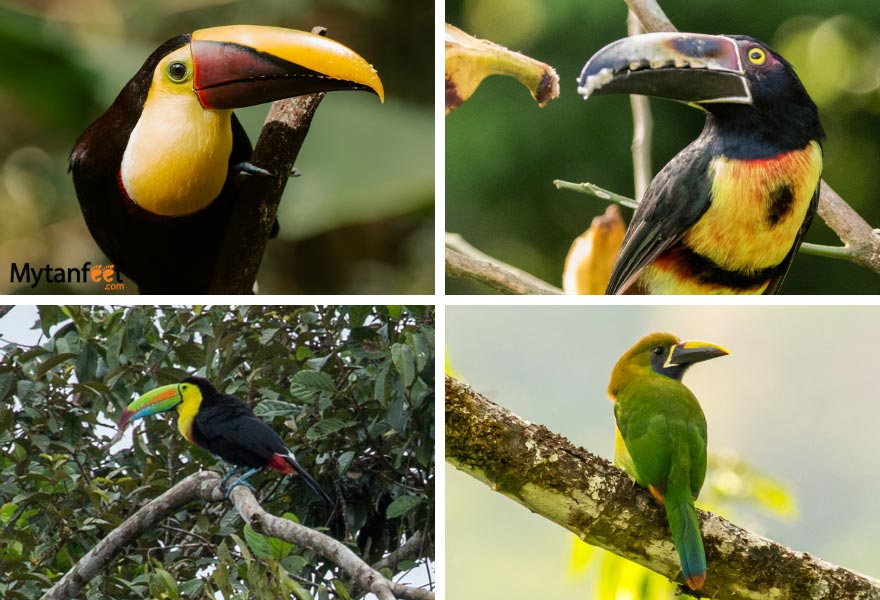
You can’t see all 6 toucans in one place in Costa Rica but you can see up to 3 in one. For example: Keel billed, Yellow throated and Emerald Toucanet in Monteverde.
The best places to see toucans in Costa Rica are Puerto Viejo, Tortuguero, Monteverde, Sarapiqui, Uvita, Manuel Antonio, Jaco, Boca Tapada, La Fortuna, Osa Peninsula and Bijagua.
You can read more about toucans in Costa Rica in this post.
Parrots
Parrots are very common in Costa Rica and the macaws are the most popular thanks to their large size and coloration.
Unfortunately, the parrot population, particularly the macaws, have been decimated due to poaching and logging but they are making a come back.
There is now a healthy population of Scarlet Macaws in the Central and South Pacific and they are recolonizing areas in Northern Guanacaste, the Caribbean, Sarapiqui and Northern Alajuela.
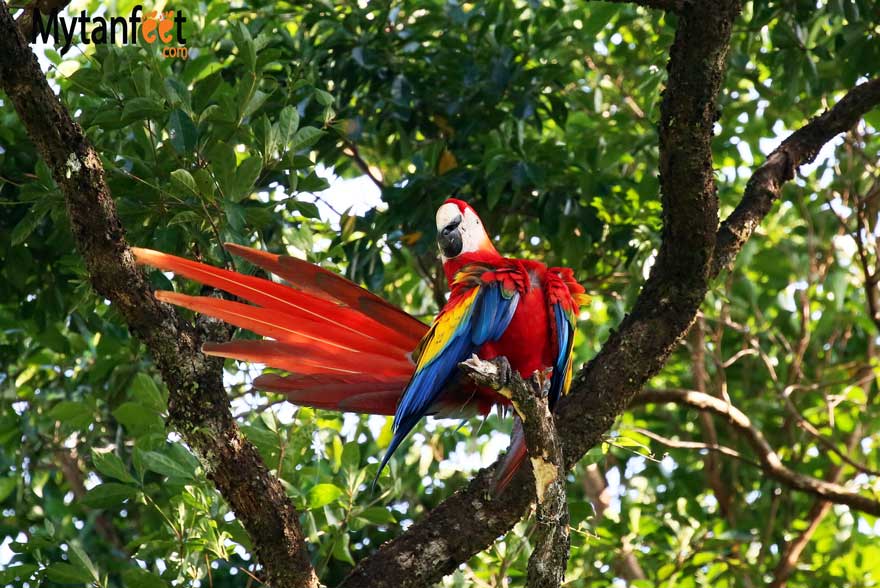
The Great Green Macaw is only found on the Caribbean side and the Continental divide. We saw them in Tortuguero, Puerto Viejo de Talamanca and Boca Tapada.
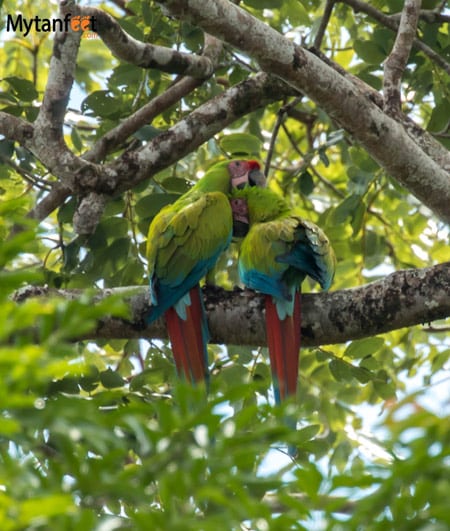
You will always hear parrots before you see them because they are loud! They mate for life and fly in big groups, so if you see one, you will see many.
Trogons and Resplendant Quetzals
Trogons are colorful birds with distinguishing undertail pattersn and eye-ring color. The most famous trogon is the Resplendant Quetzal, the national bird of Guatemala.
National Geographic declared Monteverde the best place in the world to see Resplendant Quetzals as these little birds love high elevation forests and the fruits of a certain avocado tree.
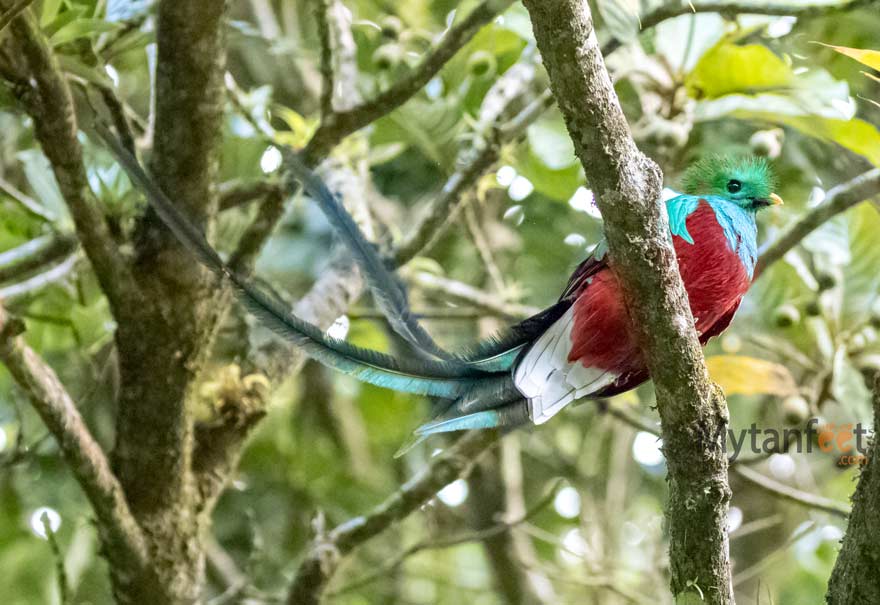
You can also see Resplendant Quetzales in other tropical cloud forest destinations such as San Vito, San Ramon and San Gerardo de Dota.
There is even a national park called Los Quetzales National Park.
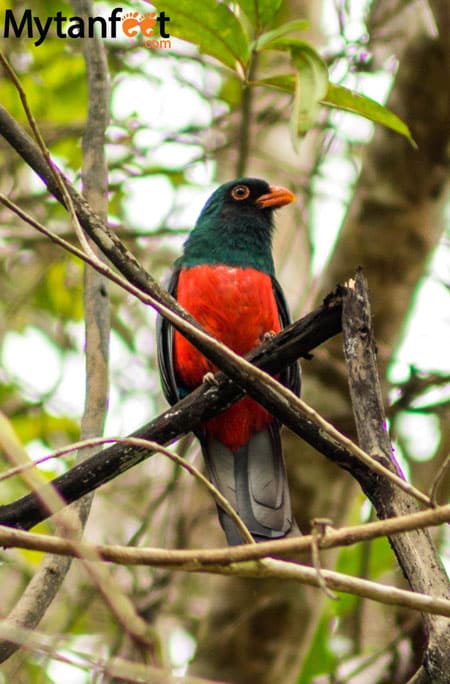
Other notable trogons are the Gartered Trogon and Slaty-tailed. Females and male coloration differ greatly so it is a lot of fun seeing these birds!
Costa Rica Hummingbirds
Beautiful hummingbirds live throughout Costa Rica. Though these little guys are quick, they are absolutely stunning, especially when their feathers catch the light just right!
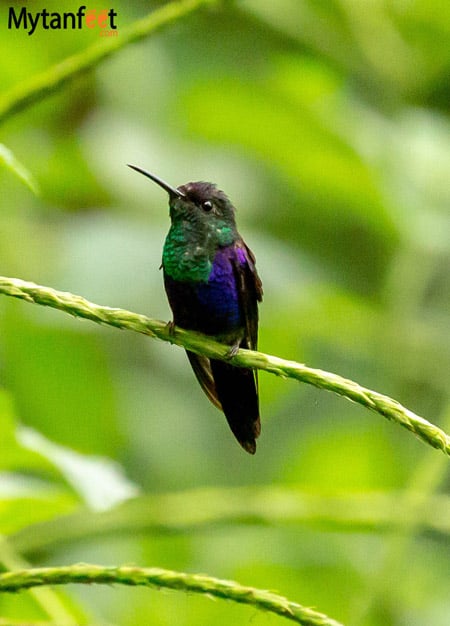
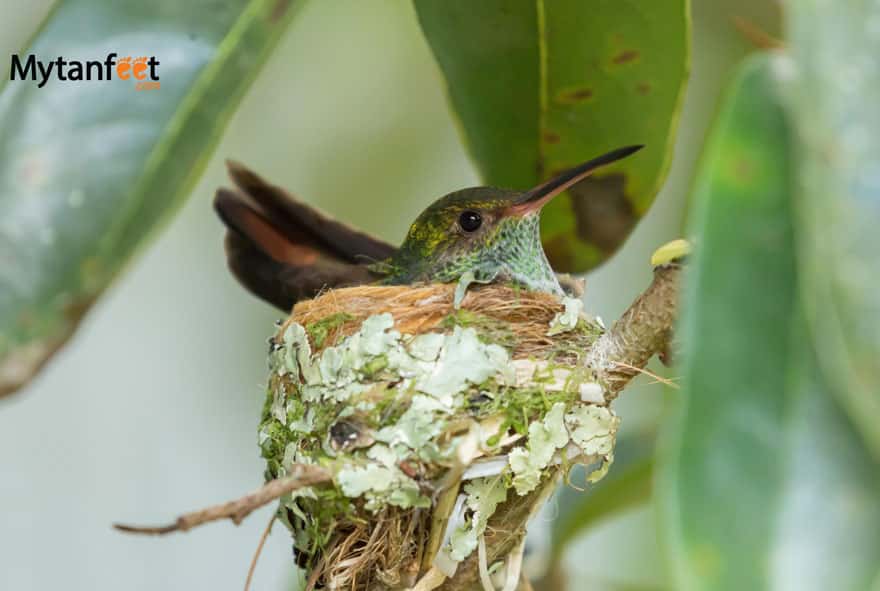
Common hummingbirds in Costa Rica are the Rufous-tailed hummingbird, Green-breasted Mango, Ruby-throated hummingbird (migratory), Crowned Woodnymph.
Costa Rica Snakes
Snakes are one of the most dangerous animals in Costa Rica but don’t let that scare you from visiting! Snake bites and attacks on tourists are not common in Costa Rica.
In fact, most tourists never see a wild snake unless they go hiking deep into the rainforest or on a guided walk through the jungle.
Common snakes in Costa Rica are the viper family, tree snakes and garter snakes. You do need to be careful around vipers as they are more poisonous and dangerous.
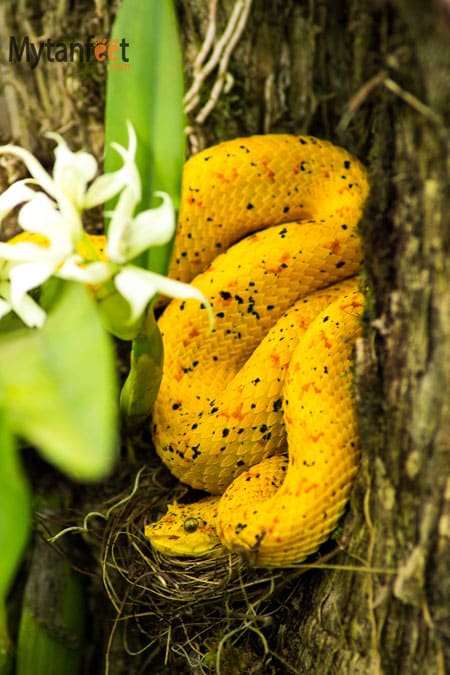
We saw this yellow eyelash pit viper when hiking in the Osa Peninsula. Our guide pointed him out as he was curled up in a tree, behind some flowers.
This is why you should NEVER touch trees, plants, flowers, or bushes with bare hands and never stray off the path.
Costa Rica Crocodiles
Crocodiles are commonly found in the rivers of Costa Rica, particularly the Tempisque River and Tarcoles River.
They also thrive in estuaries inside national parks such as Las Baulas.
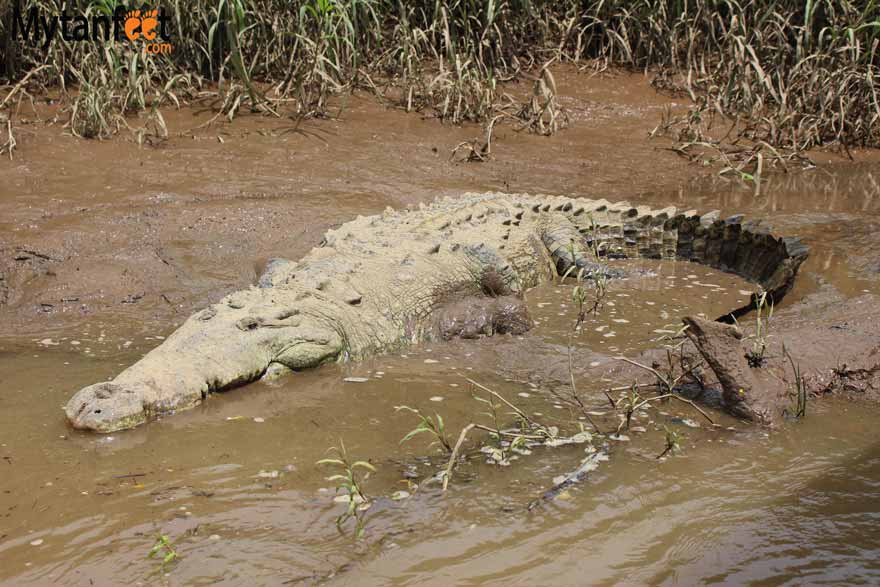
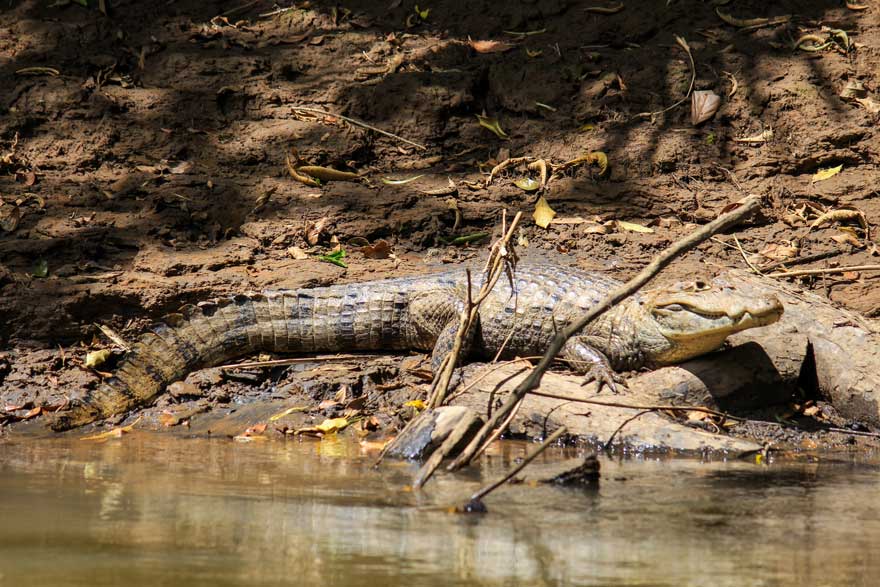
Caimans, part of the alligator family are also found in Costa Rica. They are much smaller than crocodiles but look very similar.
Costa Rica Frogs and Toads
Costa Rica is home to many spectacular frogs, many of which are endangered or threatened. There are poisonous and non-poisonous frogs in Costa Rica such as the dart frogs and glass frogs.
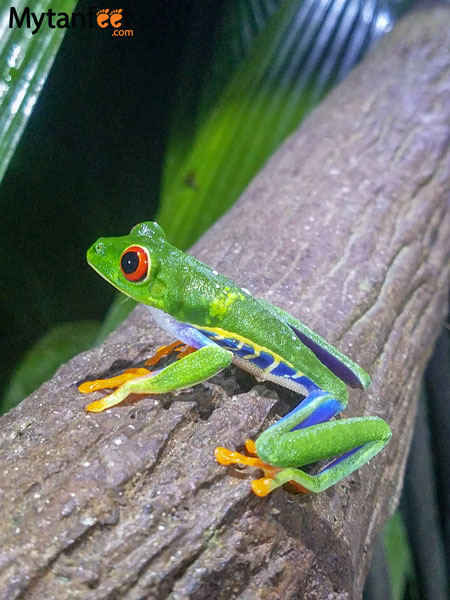
Toads are also very common in Costa Rica. Some toads you can see are cane toads and giant toad. Monteverde used to be home to a beautiful golden toad, which is now said to be extinct sadly.
The best places to see frogs in Costa Rica are humid areas like Osa Peninsula, La Fortuna, Manuel Antonio, Puerto Viejo and the Caribbean.
You need to go on a night walk as these animals are nocturnal.
Costa Rica Wildlife Photos
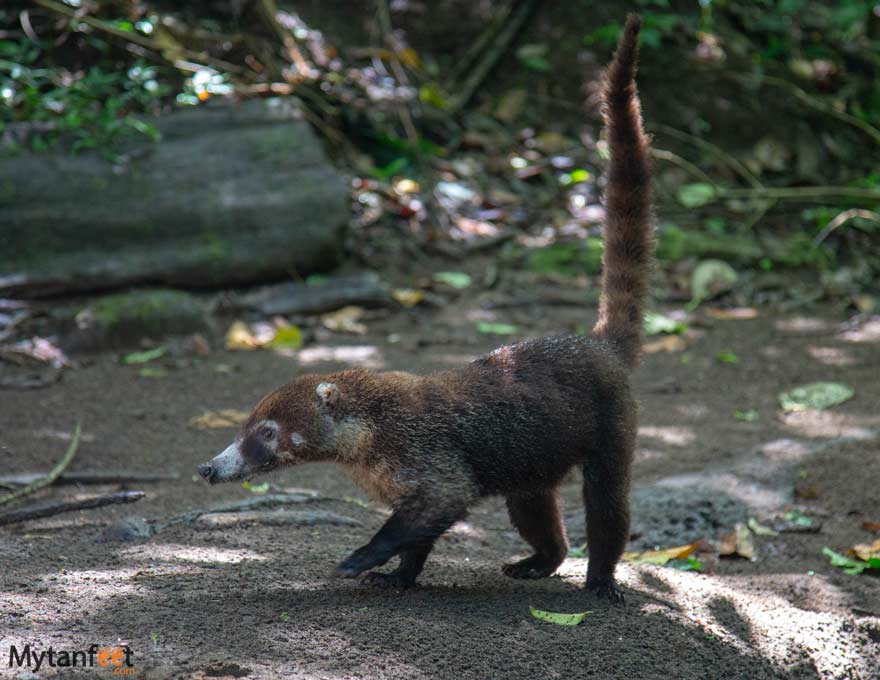
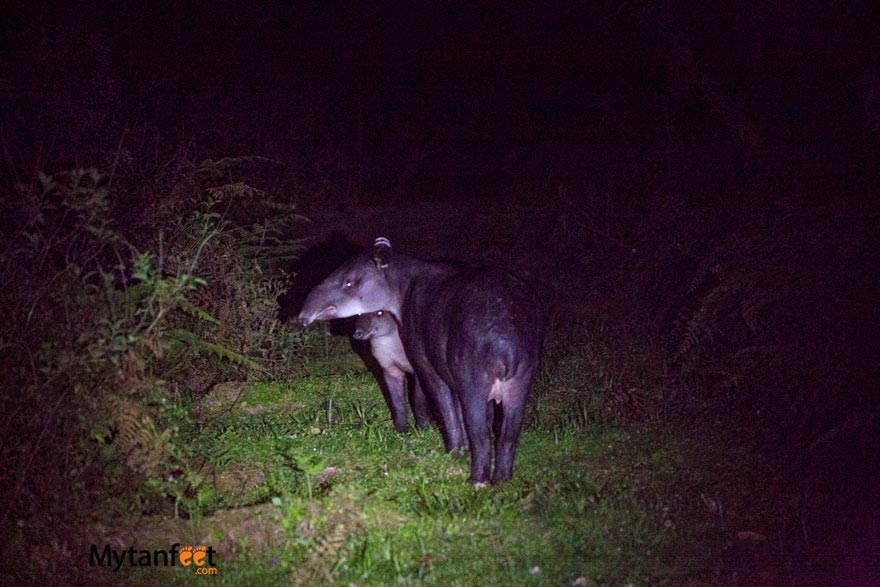
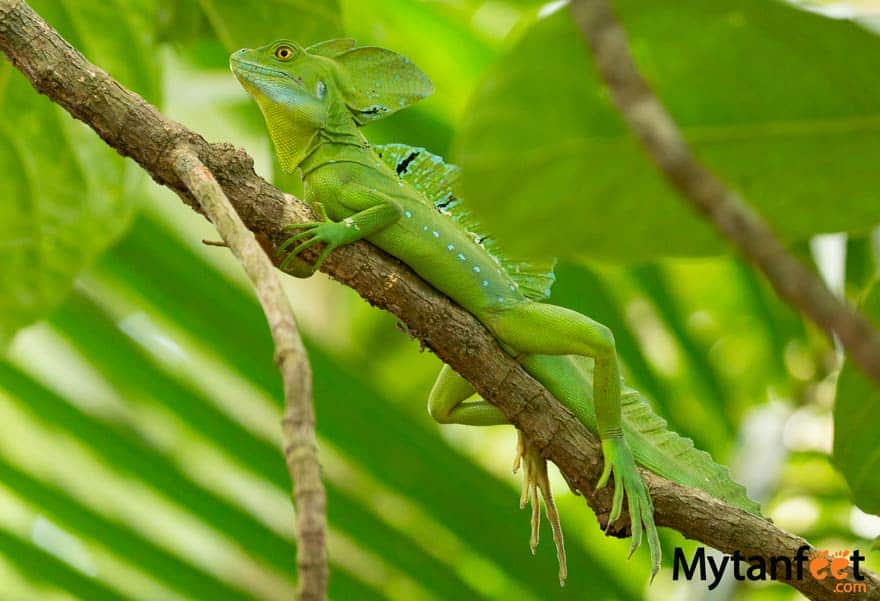
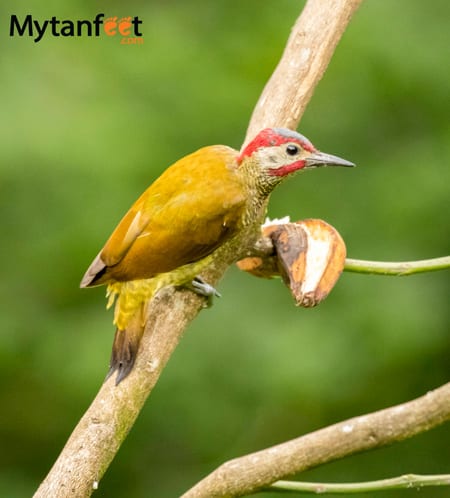
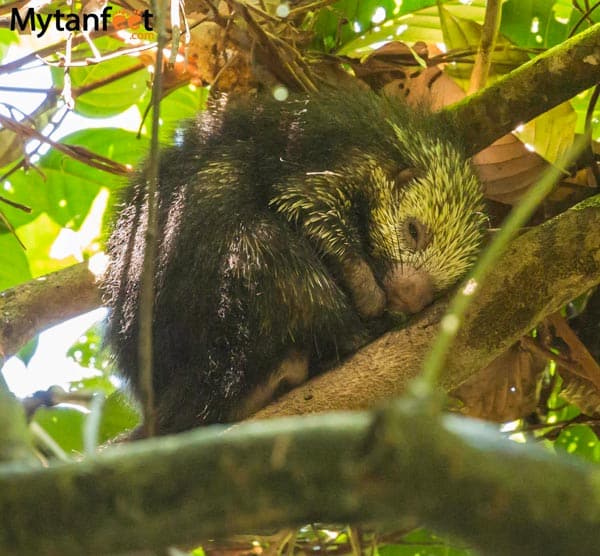
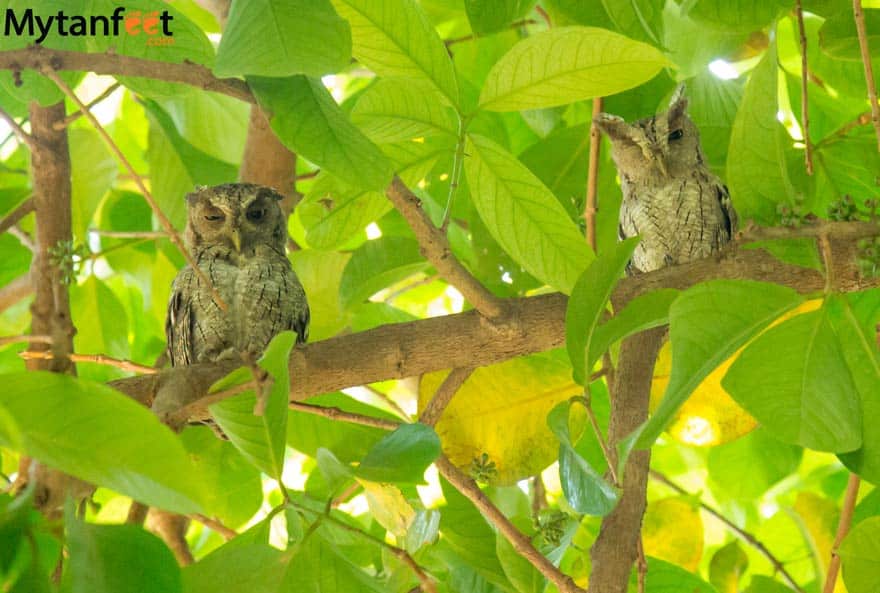
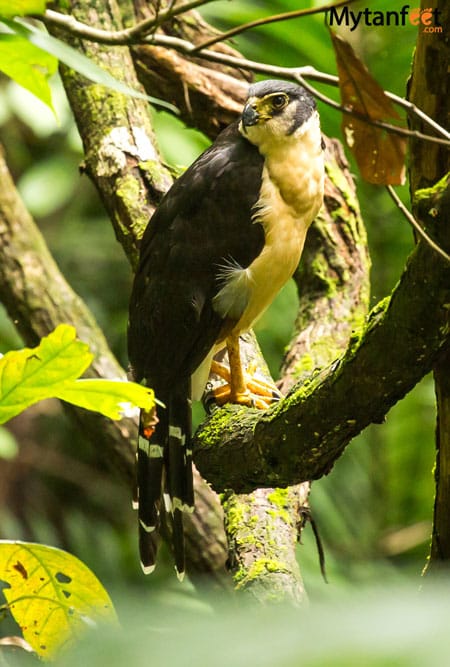
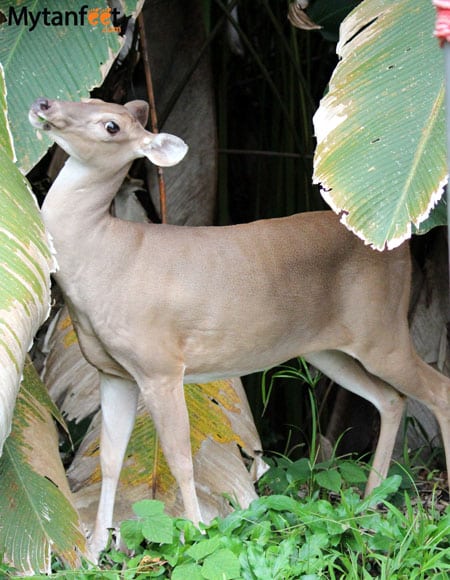
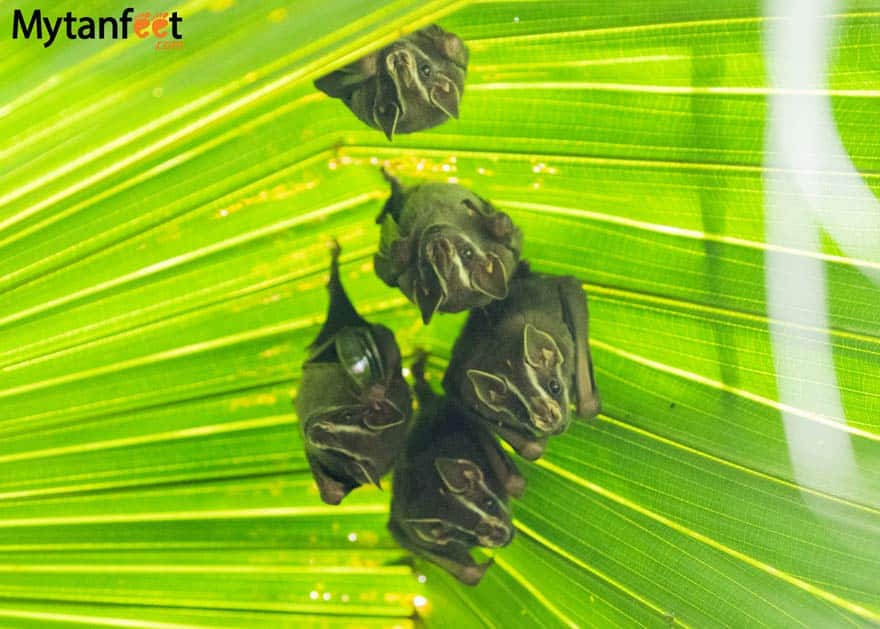
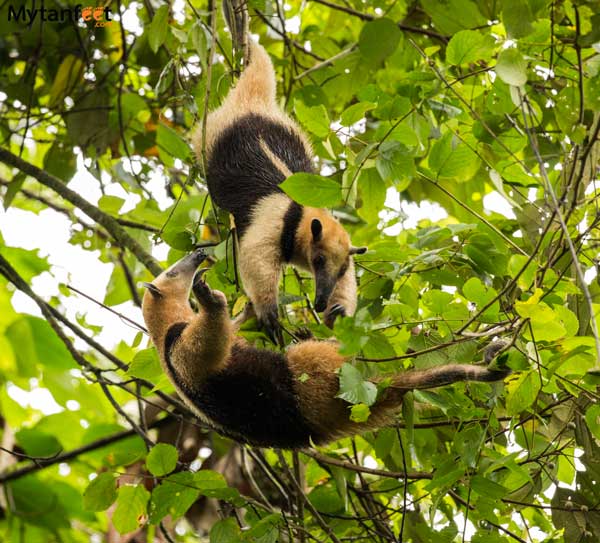
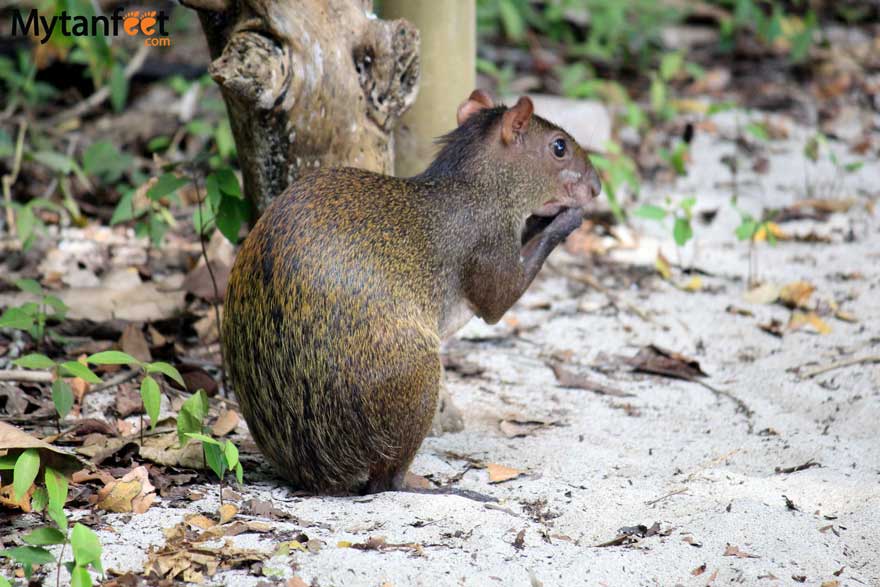
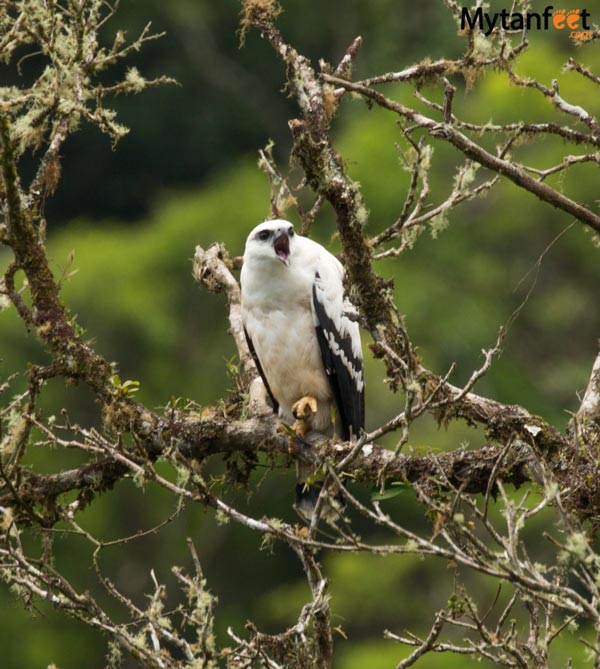
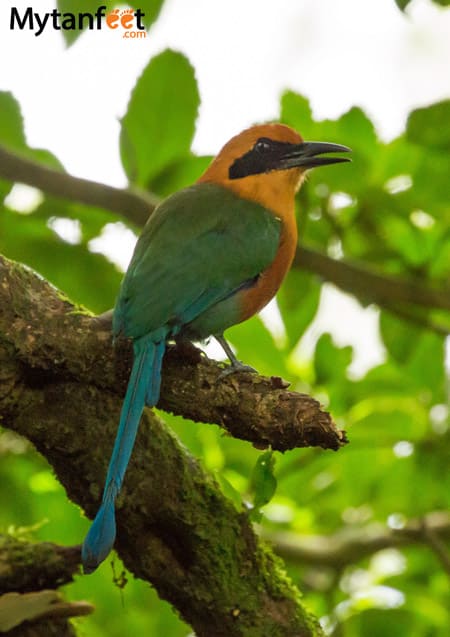
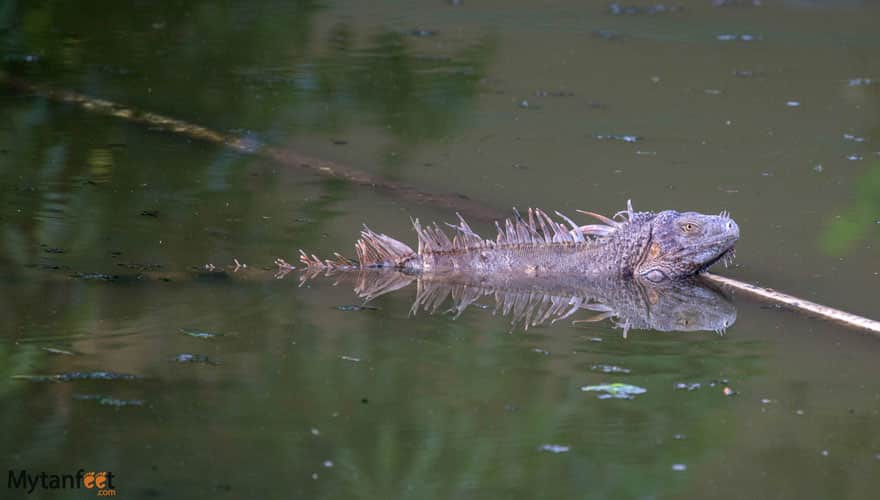
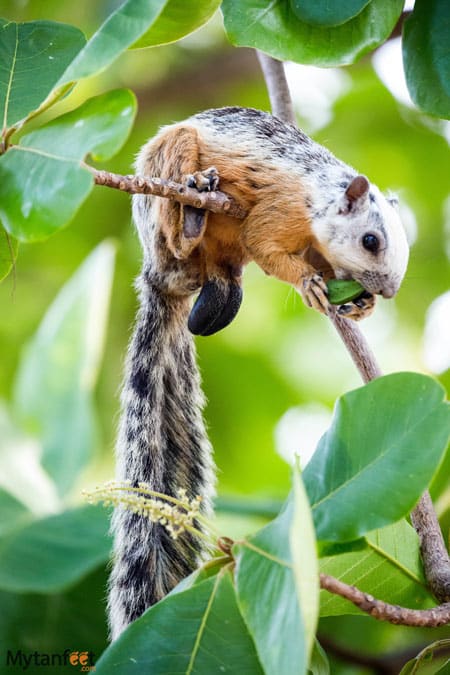
Here are some pictures of Costa Rica animals that we took, during our travels.
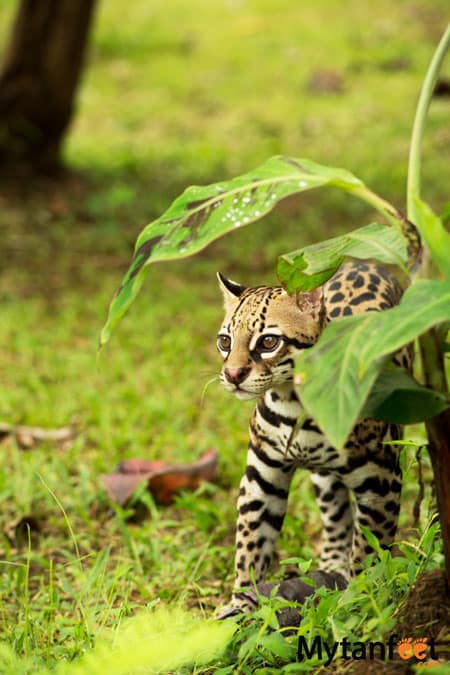
Costa Rica Wildlife Excursions
For the best experience, we highly recommend to book tours focused on wildlife with a certified naturalist guide.
The naturalist guides will have telescopes and binoculars and with their trained eyes, they can find animals that untrained eyes would never see on their own.
Some of our favorite wildlife tours are:
Heliconias Hanging Bridges + Sloth Walk (Day trip from Guanacaste)
3 in 1 Rainforest Tour from San Jose, Costa Rica
Palo Verde National Park Boat Ride (Guanacaste)
Penas Blancas Safari Float and Pure Nature Safari Float (La Fortuna)
Hacienda Baru (Dominical)
Curi Cancha Reserve (Monteverde)
Damas Island Mangrove Boat/Kayak (Manuel Antonio/Quepos)
Caño Negro Wildlife Refuge Boat Ride (La Fortuna or Guatuso)
Itinerary
Here is a 2 week Costa Rica birding and wildlife itinerary with lots of opportunities to see animals!
Costa Rica Vacation Checklist
- First time to Costa Rica? Read our First Time in Costa Rica guide.
- Not sure how to move around Costa Rica? Read our How to Get Around Costa Rica guide to find the best transportation method for you.
- Click the link to get our detailed Costa Rica Packing List so you know what essential items to bring.
- Check our Costa Rica destinations map and Costa Rica restaurant map
- Do not forget to purchase Travel Insurance for your trip to Costa Rica.
- Stay connected by purchasing a prepaid SIM Card in Costa Rica.
- Save money with Mytanfeet Deals for tours and hotels and our Costa Rica Car Rental Discount.
Sammi says
Hi Andrea, you can read in the post the best places to see all the wildlife you mentioned ^^. As for volcanoes, Arenal Arenal Volcano National Park and Poas (Poas Volcano National Park) are two of the most popular and you can read about when is the best time to visit in this post:Best time to visit Costa Rica
As for hotels, you can all our hotel reviews here: Costa Rica hotel reviews or you can check out our best all-inclusive hotel posts here:
Andrea cliff says
Hi.
Myself and hubby want to go to CR next year. When is the better month please? We want to see the volcanoes sloths turtles monkeys and toucans, which are the best places to see these please? Which hotels do you also recommend on the high end scale please?
Thank you.
Sammi says
Hi Franklin, that area has a lot of toucans and sloths so there’s a good chance you’ll see at least some toucans in the wild. But if you want to see them up close, you can travel a bit down south to the Jaguar Rescue, they are an excellent rescue center where you can learn about the animals and see rescued ones. However, you should never touch a sloth, wild or rescued and any place that lets you handle sloths or hold them, is not a good center.
Sloths have moths and algae growing in their fur (they have pretty much their own ecosystem in their fur) and touching them can upset that so please do not touch sloths. You can read more about seeing sloths in Costa Rica here: sloths in Costa Rica and toucans here: Costa Rica birds
Franklin says
Hi All,
Im going to CR for a work in Moin, Limon and Im love to see Sloths and Toucans. Is there any near place/wildlife near this area? It is possible to get a picture with handling a Sloths?
Thank you so much.
Cheers! Franklin
Sammi says
Hi Nancy, there are a ton of different accommodation options in Tamarindo and there are a few hotels on the beach. But there are also hotels that are literally right across the street and a lot cheaper, so unless you absolutely have to be actually ON the beach, those places are good options such as Cabinas Marielas or Hotel Mar Rey, it’s seriously less than a minute walk to the beach. You can read more information about Tamarindo and hotels we like here: Playa Tamarindo
Nancy Maine says
I have vacationed 8 times in C.R., and LOVE the people, the monkeys and sloths. This April 2017 I plan to rent a house for 5 days in or near Manual Antonio and bring along my daughter, her husband and two boys ages 10 and 12. I would like to take them to a second location for an additional three nights to a beach hotel, possibly Tamarindo. My question is how can I do this without breaking the bank? I do not plan to rent a car and will use the nice little buses from Manual Antonio to Tamarindo. So, I would prefer to rent a hotel on the beach in Tamarindo. I wonder are there any new hotels that may be offering discounted rates. Or any ideas on nice places offering discounts?
Sammi says
Hi Anton,
Corcovado NP is great, we visited two of the stations you can read about here: San Pedrillo and Sirena Station Corcovado National Park There’s a lot more wildlife at Sirena and some awesome hiking if you want to do day hikes or overnight hikes.
As for Spanish, you really honestly don’t need to know Spanish to get around. Since tourism is huge in Costa Rica and most locals work in tourism, they know English fairly well. You’ll always find someone who knows English especially if you’re going to the touristic places which you are going to. It’s only when you get to the small towns in the rural communities where English is not widely spoken. But all of the people who work in tourism speak pretty good English. I’ve met people who retired and live and travel in CR for the past 15 years who can barely even say good morning! Which isn’t to say that’s a good thing – for them they should learn Spanish since they live in CR but for travelers, you can get by perfectly fine without Spanish. It’s always good to know a few phrases though and it’s nice to know some words.
We have a printable Spanish cheat sheet which may help during your travels and since Yeison wrote it, it is Costa Rican Spanish: Spanish for travelers
Anton says
Hi! I’m planning a trip to Costa Rica at the end of the year. It looks like I will go to Puerto Viejo, Sarapiqui, La Fortuna, Arenal, Montverde, Manuel Antonio, and some other places with a traveling agency.
I’m also planning on going to Corcovado NP directly before or after this. I heard it’s one of the most biologically intense places on Earth. I just can’t miss that! I’d really love to go rain forest hiking, and I guess this is the absolute best place to do so in Costa Rica.
I wonder, is it hard to travel on your own in Costa Rica if you’re not good at speaking Spanish? I’m learning the language right now, but I’m not sure how good I’ll be at it at that point. I heard there are a lot of north americans visiting and retiring in Costa Rica so i figured, maybe many Costa Rican’s speak English. So I wonder, how is it?
Greetings from Sweden
Annie says
We are staying in Cabuya for 10 days in early May with two small children and would like to know where we can see sloths, dolphins, toucans, and whales, Any thoughts as to other fun activities for families with small children (age 1 and 4) would be greatly appreciated. Thanks!
Sammi says
You can download an app called “touit” which allows you to select areas of Costa Rica and see what wildlife is around.
Christa says
Annie, how was your trip? I’m considering going to Cabuya with my 4 year old in May 2017!
Sammi says
Hi Shanda, you can read in the post where are the best places to see the wildlife listed. In Jaco, you can go to Carara National Park and the Rio Tarcoles for wildlife. In Dominical, wildlife can be seen pretty easily since that area is more lush and has more vegetation. There is a wildlife sanctuary near Dominical, called Alturas you can visit to see wildlife