
Although there is a lot of information about Costa Rica on the web, there is still so much misinformation.
The goal of this post is to share with you the most important things to know about Costa Rica before your visit.
Here are 17 things to know about Costa Rica before you visit.
This post has affiliate links which we may earn a small commission from if you choose to purchase, at no extra cost to you. Listed prices are quoted in USD and are estimates. More info: Disclosure
1. Costa Rica is not as cheap as people think
This is one of the most important things to know about Costa Rica. Many people assume that Central America automatically equals cheap travel.
This is the biggest common misconception about Costa Rica. Yes, other Central American countries like Guatemala and Nicaragua are cheap to travel to, but it is not the same in Costa Rica. You can’t compare prices in Costa Rica to Southeast Asia.
Those who don’t know this about Costa Rica get a surprise when they see the prices. Tours can easily cost $150 USD a person, food can be the same price as Canada/USA/Europe and gas is around $5-6 USD a gallon.
Without careful consideration, you can blow through your budget much earlier than planned.
But we can help! Read about the cost of Costa Rica in these posts to help you stay within your budget.
Also don’t forget to take advantage of our Costa Rica deals. We have discounts for car rentals, tours and hotels.
- Cost of traveling in Costa Rica: See how much food, transportation, tours, hotels and souvenirs cost.
- Save money in Costa Rica: Our local insider tips for saving money traveling in Costa Rica.
- Cheap things to do in Costa Rica: Activities for those on a tight budget.
- 1 week Costa Rica budget: See how much 3 people spent in Costa Rica for 1 week.
2. Costa Rica is a small country but it takes longer than it seems to get around
Costa Rica is a little smaller than West Virginia and Denmark so it’s easy to think you can road trip and see the entire country in a week. Technically you can, but trust me, that wouldn’t be very fun!
This is because of the not so great infrastructure. Therefore, driving in Costa Rica are never as the crows fly.
The average speed limit on the highways here is 80 kmph (~50 mph) but you will be lucky if you go that speed your entire drive, or even half your drive.
Many routes have only one lane which causes tons of congestion and traffic as all the large trailer trucks use the same route.
They drive much slower and they’re harder to see around to pass. There is no one road that goes all around Costa Rica either that easily connects coast to coast.
So when planning out your driving routes, expect your drive to take longer than what your GPS says whether you’re using a GPS device, Google Maps or Waze.
Waze is the most widely used GPS app here and it will show you your estimated driving time based on real time traffic, but this can always change during your drive.
Read more about getting around Costa Rica here to plan out your trip.
For example, Tamarindo to San Jose is 259 kilometers or 161 miles. On a good day if we leave on a week day outside rush hour, it takes us around 4.5-5 hours.
However, due to lots of construction and more people on the road, the average drive time now is 5.5 hours without stops. One time it took us 10 hours because an deadly accident occurred on the one lane roads.
Unfortunately we were standstill for over 2 hours and ended up arriving in San Jose during rush hour which then took us another couple hours.
This is one of the mistakes to avoid when traveling in Costa Rica. Don’t try to drive everywhere, don’t drive cross country routes everyday and always know that your drive will take longer than what the GPS says.
We also don’t really recommend to drive to an excursion in the afternoon if you are coming from far away as there is a big chance you will be late unless you leave much much earlier.
Remember that if you don’t make a shared tour in time, you’ll be considered a no show which is a 100% penalty fee. For a one week trip to Costa Rica, it’s best to choose 2 destinations or pick a home base and do day trips. Plan smart, travel easy.
3. Tap water is safe to drink in Costa Rica
In the Central Valley cities, you can indeed drink the tap water. We have no problem drinking tap water in San Jose, Heredia, Cartago and some mountain areas like Monteverde.
Though tap water is generally safe to drink, I still recommend bringing a filter if you have a sensitive stomach.
Tap water in Costa Rica on the coasts tend to be hard water, meaning they have higher amounts of calcium and magnesium. You may still need to buy bottled water if you are immunocompromised.
However, some more remote and rural places generally don’t have drinkable tap water or the tap water is high in calcium/minerals, which can cause upset stomach to those not used to it.
These are places like Tortuguero, Osa Peninsula, the Guanacaste coast, Costa Ballena, Nicoya Peninsula, Sarapiqui and Golfito.
Hotels will indicate whether the water is safe and tour guides will let you know which faucets to use. Some hotels will have a bottled water station for you to fill up your bottles. Don’t forget your insulated water bottle to always have cold water!
Read more about drinking tap water in Costa Rica.
4. Dengue, not malaria is the main disease from mosquitoes in Costa Rica
The mosquito borne disease travelers should concern themselves with in Costa Rica is dengue fever, not malaria. Costa Rica has many more cases of dengue than Malaria and Zika.
Remember, mosquitoes are in Costa Rica year round and are worse in rainy season. Mosquitoes breed in stagnant water so bring plenty of insect repellent and cover up as much as possible.
Read our tips for protecting yourself against mosquitoes in Costa Rica.
Extra travel safety tip: Make sure to purchase travel insurance just in case you do catch something! You can read more about Costa Rica travel insurance in this post.
5. Costa Rica gets cold but it doesn’t snow
Costa Rica experiences typical tropical weather but it has many micro-climates. It doesn’t snow but it does get quite cold in some areas due to the high elevation.
Read more about Costa Rica weather in this post.
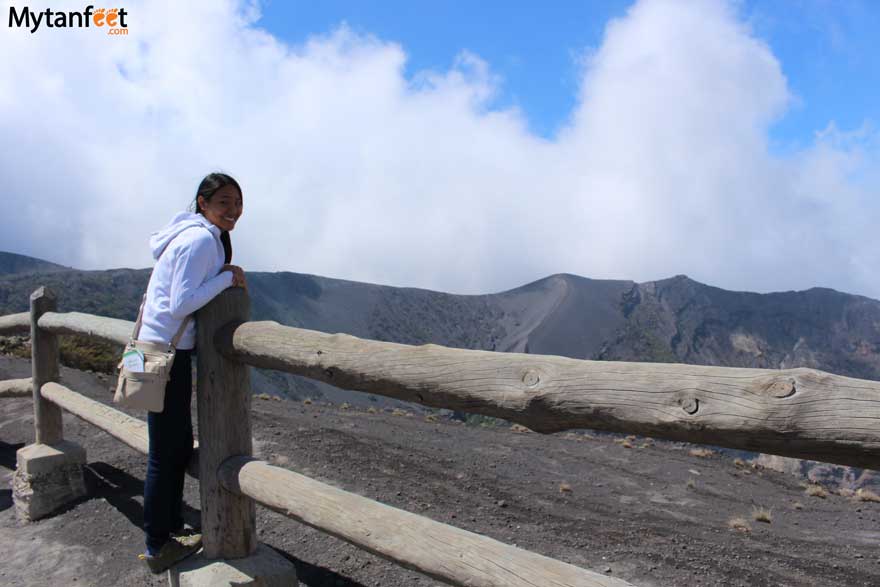
Some of the colder areas are Monteverde, Poas, Vara Blanca, San Isidro de Perez Zeledon, Chirripo and San Gerardo de Dota. Temperatures in those areas can get down to 50s° F (10° C) at night with comfortable day time temperatures around the low 70s° F (21° C).
In Chirripo, the highest mountain in Costa Rica (elevation ~3800 meters or 12000 feet) can get frost as the coldest recorded night time temperatures were around -5° C (23° F).
The coasts are always hot, mostly in the 80s° and 90s° F (27° – 32° C) during the day.
Make sure to research the area you are visiting so you come prepared. For packing tips, check out our Costa Rica packing list to see what you need to bring for different activities and destinations.
Our must have items are an insulated water bottle, microfiber towel, battery pack, sunscreen SPF 50, sunglasses, dry fast clothes and mosquito repellent.
6. US dollars are readily accepted and are the standard currency in tourism
Hotels and tour companies quote their prices in USD in Costa Rica. This is normal in tourism in Costa Rica. Additionally, Costa Ricans can have bank accounts in USD as mortgages and car payments are quoted in USD. US dollars have become the standard currency in tourism.
So when you’re trying to get your money together, don’t stress too much about exchanging it to CRC (Costa Rican colones, local currency) before your trip.
USD is accepted in pretty much every touristic destination and you can choose to pay in USD or CRC, even if it’s quoted in CRC.
If you are Canadian however, it will be better for you to have Costa Rican currency due to the Canadian dollar and USD exchange rate. Unfortunately, Canadian dollars and other currencies are not accepted in Costa Rica, only USD.
If your hotels or tour companies agree to charge you in CRC instead of USD, make sure you check the exchange rate they use. The exchange rate changes everyday, sometimes even hourly, so you need to check.
The current exchange rate is around 505 CRC to 1 USD.
If you want to exchange cash when you are in Costa Rica, the best place to exchange currency is at the bank. Do not exchange large amounts at the airport exchange rate booth as they give an extremely poor rate.
Read more about handling money in Costa Rica.
Tip for exchanging currency: supermarkets accept USD and if you pay in USD, they will give you your change back in Costa Rican colones. Easy way to exchange money without having to go to the bank. Just make sure to calculate the exchange rate. The supermarket should have a sign of the exchange rate for the day near the front or by the cashier.
7. You can still visit Costa Rica in rainy season and have a great time!
Dry season in Costa Rica has the best weather. Thanks to the sunny days and high temperatures, it is also our high tourism season because everyone wants to escape the winter up north.
However, that doesn’t mean rainy season is a bad time to visit Costa Rica. In fact, rainy season is a wonderful time to visit especially if you are on a budget or don’t want to be around tons of crowds.
Costa Rica’s rainy season starts around beginning of May and goes through the end of November. The rainiest months for most of Costa Rica is October and July for the Caribbean coast.
Yes, it rains and you do need to pack and research more for rainy season. But you will still have a great time!
Check out our Costa Rica rainy season packing list for tips.
Here are some other things to know about why it’s actually awesome to visit Costa Rica in rainy season.
- Rainy season is also Costa Rica’s low season. This means less tourists, particularly in the months of May, September and October.
- Prices for hotels and tours go down and businesses throw lots of promos in October. It’s the best time to travel on a budget in Costa Rica.
- A typical rainy season day is sunny and hot in the morning, cloudy in the afternoon and rainy in the evening/night.
- Rainy season is the best time to see certain wildlife like humpback whales and turtles.
To read more about visiting Costa Rica in rainy season, click the link. Personally, we love rainy season in Costa Rica. Less crowds, not as hot, more wildlife and it’s cheaper!
8. Sloths aren’t everywhere (sorry)
As much as I hate to break it to you, sloths aren’t everywhere. I know Costa Rica markets their cuddly sloths so much it seems that the roads are crawling with them but it’s not true.
One of the main “complaints” I’ve heard from visitors is that they didn’t see a sloth. I asked them where they were in Costa Rica and many of them were at the Pacific coast or in the city where sloths don’t live.
If you want to see a sloth, then you need to go to where they live!
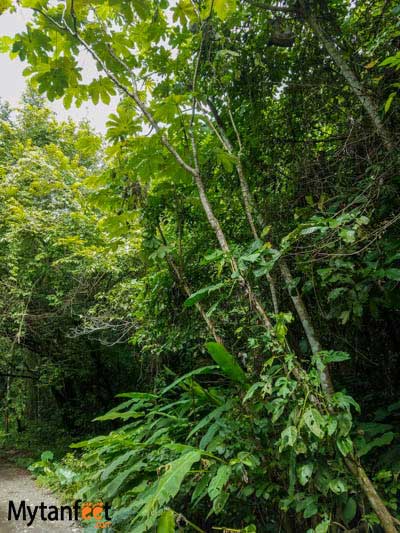
For example, it is incredibly difficult to see one in Guanacaste due to the extremely dry climate. But if you visit the South Pacific or the Caribbean coast, sloths are much more common thanks to the lush rainforest.
Sloths, being the masters of camouflage, are normally very difficult to see without a guide or trained eye. So for the best possibilities to see a sloth, hire a guide.
They have trained eyes and will have binoculars or telescopes to find them. We also highly recommend bringing your own binoculars.
If you’re staying on the Guanacaste coast and want to see sloths, check out this awesome Guanacaste rainforest and sloth day tour that goes to two private reserves in Bijagua. Request to book the private Guanacaste rainforest sloth tour here.
Find out where are the best places to see sloths in Costa Rica in our guide.
9. Police can stop and ask for your papers at any time
In Costa Rica, police are legally allowed to stop any car and ask for papers. Always have a color copy of your passport and photo of your tourist stamp with you.
Remember that to legally drive in Costa Rica as a tourist, you need to have your original passport (not a color copy), your original driver’s license and a valid tourist stamp with you.
If a police stops you, they’ll normally ask you for your passport, ask you where you’re going and then send you on your way.
Most of the time they don’t ask anything else and many of them speak some very basic English.
Also something else to note is that the police in Costa Rica are generally very nice. They don’t have a “shoot first ask later” mentality here and are willing to help tourists out.
Likewise, there is a tourist police (policia turistica) that are specifically to help tourists so don’t be afraid to ask them questions.
10. Wi-Fi is readily available…
…at hotels. It is common for hotels to offer free Wi-Fi and many of them have it available throughout the whole property.
However, you will not always find open Wi-Fi in public places. It’s not like NYC where you can find a Starbucks and use the free Wi-Fi.
If you are eating at a restaurant, sometimes they will post a sign somewhere their Wifi network and password.
If you don’t see it, you can ask them for the password. I’ve found most places are OK with giving it out as long as you are a customer.
If you always want Internet during your entire time in Costa Rica, we highly recommend getting a prepaid SIM card for your phone or renting a Wifi hot spot. Car rental agencies have WIFI hot spots for rent.
Find out how to get a prepaid SIM card in Costa Rica.
If your phone uses eSIM, get an eSIM plan with Airalo, (get 10% off your eSIM plan with Airalo using our promo code “mytanfeet”) or Holafly (use promo code Mytanfeet for 5% off).
Travel tip: The way prepaid SIM cards work is you will take out the existing SIM card in your smartphone you use at home and put in the Costa Rican one. Now your phone will be on the Costa Rican network so you can make local calls and texts in Costa Rica and be able to go on the Internet. Your phone number from home will NOT work anymore. A prepaid SIM card will subtract the credit used from calls/texts/internet from your balance accordingly. When your balance is low, you can add more credit to it at a supermarket or cell phone store.
11. The standard tipping amount is 10%
This is something important to know about Costa Rica. First of all, tipping is not absolutely mandatory in Costa Rica.
This is because tip, or service tax, is normally already included in the price so Costa Ricans don’t tip extra. Service tax is 10% in Costa Rica.
However, if you would like to tip your guide, driver, hotel maid, bartender, property manager… you may do so and it is very well appreciated.
The standard amount to tip in Costa Rica is 10% and you can tip in Costa Rican colones or USD. You can tip more or less depending on how you feel the service was.
Read more about tipping in Costa Rica in this post.
12. You must drive defensively in Costa Rica!
People are always surprised by the driving in Costa Rica. It’s something I warn people about when they are renting a car in Costa Rica because the driving here is not well organized due to the not so great infrastructure.
Simply stated, always drive defensively, especially in the cities. Don’t get stressed out or mad because it is a fact that you will get cut off and tailgated. You will see cars jump the line, not heed stop signs, run red lights and not use blinkers.
Of course not all Costa Ricans drive this way but for the most part, it is like that, especially in the cities. Once you get out to the rural areas, there are less cars but you still need to drive defensively.
There are always people, dogs, chickens, cows and other things in the middle of the narrow road. There is a lack of sidewalks, street signs and street lights so people will park in the middle of the street, driver’s won’t yield to street lights or signs and there may be many unexpected speed bumps without any notice.
Get our Costa Rica car rental discount here and save some $$!
13. San Jose’s not as bad as people make it out to be…
…for a day. San Jose is not the biggest nor prettiest capital city but it does have some hidden gems. You do not need many days in San Jose to get a good feel of the city. Just a day, day and a half or two is enough.
Then there are the cultural treasures: the National Theater and museums. Any history lover will want to stop by the city as there are few museums of this quality anywhere else in the country.

So when it comes down to it, San Jose really isn’t as bad as people make it out to be for 1 or 2 days.
You can find some of the best restaurants and craft beer in San Jose!
And honestly, it is the best place to experience Costa Rican life since over 1 million Ticos live and work in the capital city (out of a population of a little over 5 million).
Also, many tourists use San Jose as their home base for their vacation and book day trips. San Jose is centrally located so you can see many beautiful places within a 2 hour drive on a day excursion.
Have a few days in San Jose? Check out our San Jose, Costa Rica travel guide for the best things to do or our San Jose day trips post.
You can even get our San Jose tours discount to save some money!
14. English is widely spoken but not all Costa Ricans speak English
People assume that because Costa Rica is a touristic country and that there are so many North Americans here, that all the locals know English.
Though many Costa Ricans know a degree of English, not all of them do. The Costa Ricans with higher education and who work in tourism, real estate or call centers are generally fluent in English.
But don’t assume that all Costa Ricans know English. For tourists, you can get around Costa Rica without knowing Spanish, but it is helpful to learn at least the basic words.
You can download our handy Costa Rica Spanish cheat sheet to learn a little.
Personally, we always learn how to say the basics like hello and thank you in the language of the country we’re visiting to be polite.
15. It gets dark by 6 PM everyday in Costa Rica
And the sun rises around 6 AM everyday since Costa Rica is 8-12 degrees from the equator. Sunrise and sunset changes only about 15 minutes throughout the year.
Being a tropical country, Costa Rica doesn’t have Daylight Savings Time either.
So make sure to take into account that it gets dark by 6 PM everyday when planning your trip. Many places close at 5 PM too, not many places open late night nor are there really any 24 hour supermarkets or restaurants.
In Costa Rica, you will learn to enjoy the early mornings. Plus, it’s a bit hard to sleep in with so many monkeys howling and birds chirping at 5 AM!
Personal tip: we don’t recommend to drive long distances after dark or to walk on the beach or streets at sunrise or late at night.
16. Costa Rica doesn’t have much in common with Mexico
For some reason, many foreigners think Costa Rica is like Mexico. But Costa Rica and Mexico are completely different!
Costa Rican food isn’t like Mexican food at all and even the Spanish is different. In Costa Rica, they don’t say andale andale or anything like that. They are two completely different countries with their own cultures, traditions and customs.
So when you visit Costa Rica, don’t crack any jokes about Costa Rica being Mexico or Costa Ricans as Mexicans. It’s one of the points about being a responsible traveler and as guests in a foreign country, we have to be respectful.
PS. Costa Rica is not Puerto Rico either. For some reason lots of people get these two mixed up! We get a lot of “Costo Rico” or “Costa Rico” comments.
People also think Costa Rica is an island, which it is not. We have even had people book their flight to San Juan, Puerto Rico instead of San Jose, Costa Rica! Do not make this mistake when planning your trip to Costa Rica!
17. Costa Rica doesn’t have a military and theft is the most common crime against tourists
Did you know that Costa Rica is one of 23 countries in the world with no military? There is only the police force, the OIJ and GAO (like a SWAT team).
Because of the lack of military, Costa Rica is a peaceful country, making it one of the safest countries in Latin America for traveling, especially families.
The most common crime in Costa Rica is theft: car/house break ins and pick pockets. To prevent this, you must always use your common sense and have a heightened sense of awareness.
Don’t hang your purse on the back of your chair, don’t put your backpack in the overhead compartment or under your seat of the bus, don’t leave your wallet on the dashboard of your car, don’t leave your car windows open.
So when you’re traveling in Costa Rica, make sure to always lock the door, triple check your doors are locked, roll up the windows, have one person stay with your stuff at all times and don’t leave any valuables in the car.
Don’t park in remote, dark areas. Don’t leave your belongings unattended on the beach. Use your common sense. Be alert and aware.
You can read more Costa Rica safety tips here and our Costa Rica tourist scams.
Read more Costa Rica travel tips below!
Types of accommodation in Costa Rica
Costa Rica Vacation Checklist
- First time to Costa Rica? Read our First Time in Costa Rica guide.
- Not sure how to move around Costa Rica? Read our How to Get Around Costa Rica guide to find the best transportation method for you.
- Click the link to get our detailed Costa Rica Packing List so you know what essential items to bring.
- Do not forget to purchase Travel Insurance for your trip to Costa Rica.
- Stay connected by purchasing a prepaid SIM Card in Costa Rica.
- Save money with Mytanfeet Deals for tours and hotels. Save more money with our Costa Rica Car Rental Discount.
Evelyn Burgos says
Hello,
Please help.
I am a solo traveler staying by the San Jose airport for two days before heading to a private yoga retreat in the mountains of Alajuela. I arrive in CR within 24 hours.
This will be my 5th visit to Costa Rica. It’s my 4th to Alajuela. I rented a car, but never ever drove during any of my past visits.
I plan to visit Jaco Beach and go clothes shopping. How challenging is the drive to Jaco Beach as a fist timer? Will the GPS (Waze) on my Phone work? Can you recommend a shopping district in San Jose or Alajuela?
Sammi says
It’s easy to drive to Jaco but if you don’t want to worry about driving, I’d just take a shared shuttle or public bus.
Harriet says
Hi, thank you for all the really helpful information.
We are coming to
CR in December for 8 days with our two young teenagers. We don’t want to move around too much, my husband is keen really for one spot. Would you recommend Nicoya peninsula or Osa peninsula ? Thank you so much!
Sammi says
Those places are extremely different so it depends on a bunch of things. You can read our guides to get more information. Osa Peninsula and Nicoya Peninsula