
If you’re visiting Costa Rica during rainy season, the most important thing about preparing for your trip is to pack properly.
Tropical weather is no joke and the rain can come suddenly and quickly so it is important to bring the proper gear to protect yourself and your gear.
Therefore, if you’re visiting Costa Rica during the rainy season, check our rainy season packing list post to see the essential items to bring.
This post has affiliate links which we may earn a small commission from if you choose to purchase, at no extra cost to you. Listed prices are quoted in USD and are estimates. More info: Disclosure
What’s rainy season like in Costa Rica?
First, rainy season for most of the country is from beginning of May to beginning of December.
However, it’s tropical weather so it can start/end a little sooner or a little later. Also, some places may rain more than others.
There are over 25 micro-climates in Costa Rica so the weather can vary quite a bit.
The peak rainy season months for most of the country is October. September is also fairly rainy as well, particularly during La Niña years.
However, on the Caribbean coast (Tortuguero, Limon and Puerto Viejo), October is their summer month due to their different climate pattern.
If you’re visiting mid April or mid December, still be aware that it may rain, especially for places up in the mountains or in the rainforest.
These are places like Vara Blanca, Poasito, San Vito, Bijagua, Dominical, Uvita, Monteverde, La Fortuna, Osa Peninsula and Bajos del Toro.
Read more about Costa Rica weather in our post.
Average Temperatures during Costa Rica’s Rainy Season
The average day time and night time temperatures during rainy season in Costa Rica does not vary greatly from dry season. It normally cools off just a few degrees.
On the coasts, average day time temperatures are around low to mid 80°s F (26° – 29° C). Average night time temperatures are around mid 70°s F (23 C).
In the mountains and in high elevation areas, temperatures are much lower.
In places like Irazu, San Gerardo de Dota, Poas, Vara Blanca, and San Isidro de Perez Zeledon, night time temperatures can go down to low 60°s F (15° C) and colder if it is very windy.
Day time temperatures are around low 70°s F (21° C).
What to Know About Costa Rica’s Rainy Season
The most important thing to know about rainy season is that it’s spontaneous – it is a tropical country after all!
It may be a beautiful sunny day out and then it’ll become dark and rainy in two seconds. Then it’ll stop raining and be super clear and sunny for an hour. And then start raining again a few hours later in the night.
Generally in rainy season, it’s sunny in the morning and rainy in the late afternoon and evening.
Rainy season in Costa Rica is not as if someone just turned the faucet on on May 1st. It is a gradual transition from dry to rainy with on and off, spontaneous random rains and then can get more constant rains in late afternoons and nights the further into rainy season it is.
If there is a tropical storm or hurricane in other parts of the world, it will also affect Costa Rica and mornings may be dark and rainy.
Rain in Costa Rica Video
You can get idea of how hard it rains in Costa Rica in this video. This was taken in Playas del Coco in Guanacaste in May.
This rain lasted about 20 minutes and then stopped.
It started back up again about an hour later which is typical rainy season weather. It’ll be super sunny one minute, pouring down the next, then sunny again.
Rainy season in different parts of Costa Rica
- Caribbean side (Puerto Viejo, Limon, Tortuguero): this area doesn’t follow the straight May-November rainy season in Costa Rica. It actually rains throughout the year with October being the driest month. June/July and November are usually the rainiest months.
- Guanacaste (Tamarindo, Papagayo Peninsula, Samara, Nosara, Liberia, La Cruz): this is is the driest area. In May, it starts getting super cloudy and humid. June can get more rainy in the afternoons and nights. Then in July it’ll get hot and dry for a few weeks due to a little summer phenomenom. In August, it’ll start getting more cloudy with few off and on showers. By September and October, it’ll start having more consistent rains, mostly in late afternoon, evenings and nights.
- Nicoya Peninsula Puntarenas (Montezuma, Tambor, Paquera, Santa Teresa, Mal Pais): Their weather is very similar to Guanacaste’s weather, very dry and hot in dry season.
- Central Pacific (Jaco, Manuel Antonio): Experiences typical rainy season days with sunny mornings and cloudy/rainy afternoons. Very humid. This area can quite hard August – beginning of December at night.
- South Pacific (Dominical, Uvita and Ojochal): this area is hot and humid and can rain even in the dry season months. We visited Dominical in February where it poured for almost a week straight.
- Osa Peninsula: very humid and when it rains, it pours in the Osa. Mostly at night in rainy season but during September – November it can rain quite a bit, usually afternoons and nights.
- Central Valley: This area follows the May-December rainy season and it rains hard in the city. It usually starts raining mid to end of April.
- La Fortuna: Follows a typical weather season but can rain in April. Rains hard July – November and can on and off during the rain.
- Monteverde: This area is up in the cloud forests at nearly 2000 meters in elevation. Clouds roll in and out all throughout the year with constant spring showers in dry season.
Best Packing List for Rainy Season in Costa Rica
Many of these tips come from personal experience as we know first hand what it’s like to backpack the country in the rainiest month and hike up a volcano in the middle of a thunderstorm.
Add these items to your normal packing list so you can have a safe and fun time in Costa Rica.
You can check out our complete packing list for Costa Rica or read on for our suggestions for packing for rainy season in Costa Rica.
The Beach (both Pacific and Caribbean)
If you’re visiting the beach, still pack summer clothes such as swimsuits, flip flops, tank tops, and shorts.
It doesn’t get cold at night but it won’t hurt to throw in a pair of long pants or a light jacket as mosquitoes are very bad on the coasts during rainy season.
I still wear my normal dry season clothes everyday (shorts and tank tops) in the rainy season.
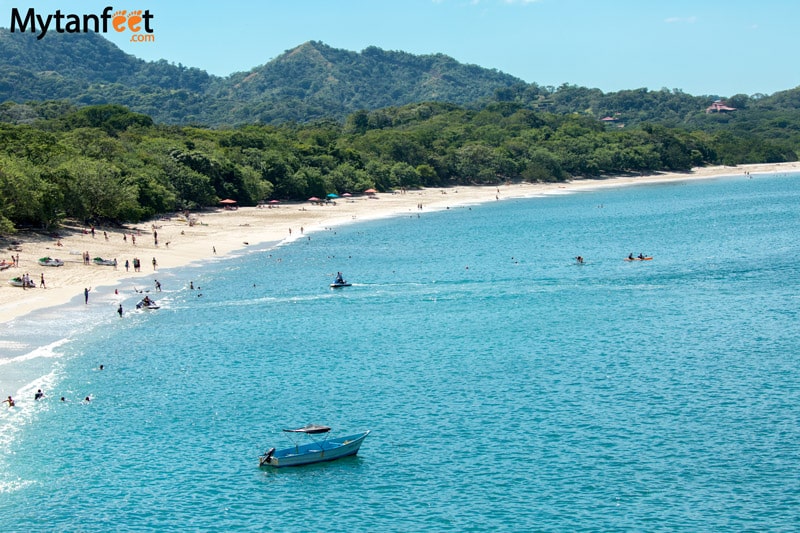
The South Pacific and Caribbean side are much more humid than the North Pacific, so bring some clothes that dry fast like Nike dri-fit.
It’s difficult to hang dry clothes when it’s 90% humidity outside! I avoid jeans as it takes forever to dry.
The Mountains and Cloud/Rain Forest
If you’re visiting the mountains or cloud forests, you will need to bring long sleeve shirts, a sweater or warm jacket, closed toe shoes, socks and long pants.
It gets quite chilly at night and when it rains so you’ll want to come prepared.
The coldest temperatures in Costa Rica have been recorded at -9°C (15° F) at Chirripo National Park in the Talamanca Mountain Range!
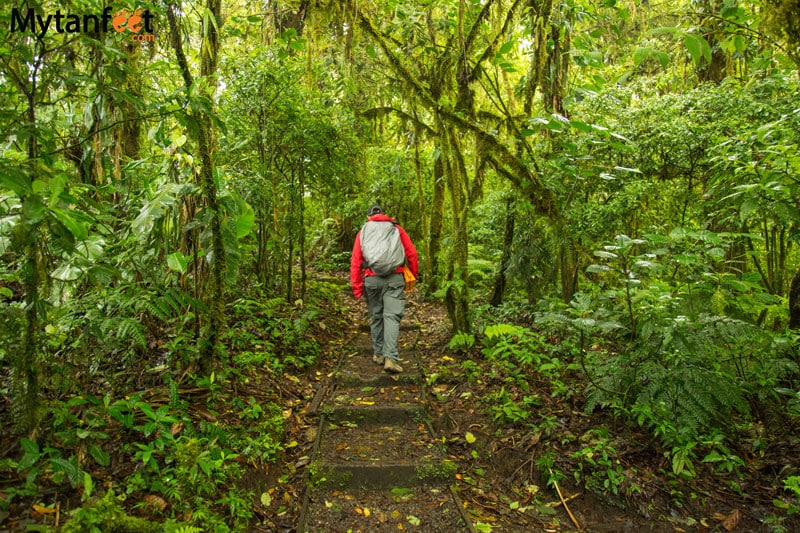
Make sure to bring a warm jacket, socks, warm hat and long warm pants.
Other mountain areas that get cold are up in Bijagua, the mountain area around Turrialba like Santa Cruz, San Isidro de Perez Zeledon, San Gerardo de Dota, Cerro de la Muerte, Poas and Nuevo Arenal.
The City (Central Valley like San Jose, Alajuela, Cartago and Heredia)
The city doesn’t get as cold as in the high mountains but it can get fairly cool. Bring long pants, a sweater, socks and closed toe shoes.
The Central Valley area has a pretty comfortable climate all year long and at night, you can snuggle up with a blanket and cup of hot chocolate or tea.
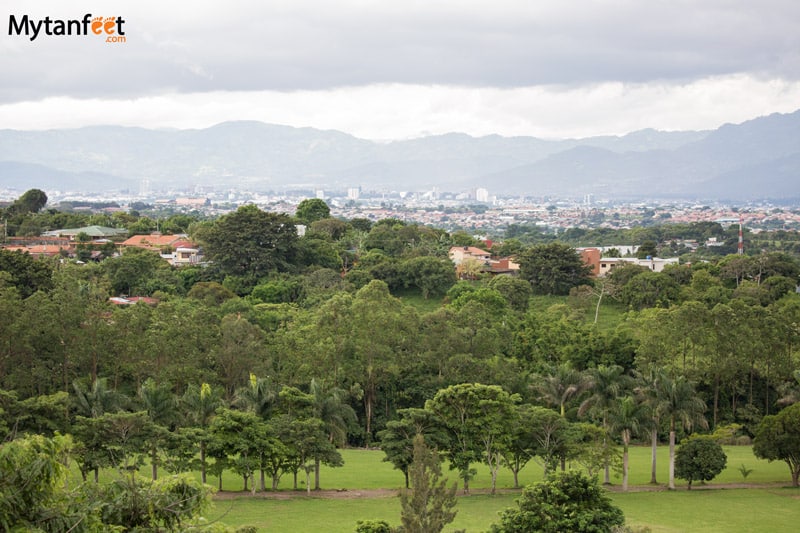
If you go up in the mountains of the Central Valley like the Poas or Irazu area, it gets very cold as you’re higher in elevation.
If you’re up in the mountains of Grecia, San Ramon, Zarcero, Atenas, a sweatshirt is a must!
Packing for Rainy Season in Costa Rica: Important Items to Bring
In addition to your standard Costa Rica packing list, here are some very important items to add to your rainy season packing list for Costa Rica.
This will help keep all your electronics and personal items from getting ruined especially if you are caught in a rainstorm.
Waterproof Backpack and bags
I can’t stress enough how important it is to bring waterproof equipment.
We lost a brand new Canon camera when we got caught in a rainstorm while hiking with a supposedly waterproof backpack.
After that, we got a real waterproof backpack, one from Aqua Quest.
We also have these Rain Covers and we both also have this IDRYBAG dry bag backpack which has been awesome for boating and hiking.
If you are doing any aquatic outdoor activities like boating, snorkeling, fishing, or waterfall hikes, then you should bring waterproof bags or dry bags to protect your stuff.
Plastic bags, ziploc bag
Extremely useful when you need to wrap up dirty shoes, collect dirty or wet clothes or wrap your backpack or bag.
I like to bring the big white garbage bags that have a drawstring and the normal grocery market bags for dirty clothes.
Ziploc bags are a quick and easy way to protect your stuff from sand and water. Can never bring too many!
Water shoes/sandals
If you are doing light outdoor activities, closed toed hiking sandals or waterproof trail running shoes are the best shoes in the rainy season.
Yeison and I both have a pair of KEEN sandals that are excellent for tubing and rafting. The sandals let your feet breathe and say goodbye to nasty soggy socks! For hikes, we both love our Salomon waterproof trail running shoes. These shoes are amazing!
For more advice, check our post on best shoes for Costa Rica.
Rain jacket
A must have item. And a real, waterproof rain jacket. The best one is a shell because it is very humid in Costa Rica.
A shell is light and usually have the armpit vents to lets air flowers through. Yeison and I both use North Face Venture shells.
Poncho
I would recommend a heavy duty poncho if you are hardcore photographer so that way the poncho can cover your backpack for more protection.
However, a poncho is not really necessary if you are already bringing a rain jacket.
Quick dry travel towel
I love love love my micro-fiber towel. It’s incredibly useful for tropical weather. When you get caught in rainstorms, use it to dry off when under cover.
Or if you’re hiking in the national parks, use it to wipe the sweat off. So many uses for a microfiber travel towel.
A flashlight
During rainy season, it is common for the power to go out. Sometimes for a minute, sometimes for longer.
However, many streets do not have street lamps or are very very dimly lit, this is especially apparent in rural areas.
Bring a small powerful flashlight just in case. A headlamp is also super handy.
Remember, it gets dark by 6 PM everyday.
Any waterproof/water resistant clothing
I bought a pair of water resistant Columbia hiking pants and am obsessed with them.
Yeison saw how much I liked them and he bought himself a similar pair for men, more cargo pant style.
I also have a pair of Arc’teryx water resistant pants (Parapet or the Gore Tex) that are fantastic and very light.
It’s helpful to bring clothes that are quick dry or water resistant because many local laundromats in Costa Rica don’t use dryers.
Furthermore, it is very humid in Costa Rica all year long so you will sweat a LOT.
Pro tip: If you don’t have access to a laundromat, bring some dryer sheets so that your dirty clothes don’t stink up your luggage too bad.
Some optional items
- Travel umbrella: Get a small travel umbrella to save space.
- Extra battery pack: This is particularly useful because the power can go out occasionally during rainy season in rural areas. A extra battery pack will make sure your phone will have plenty of battery.
- Travel organizing cubes. So helpful!
- A travel hair dryer. Hostels/cheap hotels and vacation rentals don’t always offer hair dryers. In rainy season, a folding travel hair dryer is useful especially when visiting colder destinations.
And don’t forget your sunscreen and mosquito repellent.
You will still need to protect yourself from the sun even if it’s cloudy out and mosquitoes are worse in rainy season.
Make sure you cover up or apply mosquito repellent or sunscreen often during rainy season!
Costa Rica Vacation Checklist
- First time to Costa Rica? Read our First Time in Costa Rica guide.
- Not sure how to move around Costa Rica? Read our How to Get Around Costa Rica guide to find the best transportation method for you.
- Click the link to get our detailed Costa Rica Packing List so you know what essential items to bring.
- Check our Costa Rica destinations map and Costa Rica restaurant map
- Do not forget to purchase Travel Insurance for your trip to Costa Rica.
- Stay connected by purchasing a prepaid SIM Card in Costa Rica.
- Save money with Mytanfeet Deals for tours and hotels and our Costa Rica Car Rental Discount.
Margot says
Sammi, I love your website and advises! We are going to Arenal and Tamarindo 7/16-7/23/16. I have read that there is a little less rain during this time of July (“little summer”). Is that true, do we have any chance for any dry morning at Arenal? Thank you so much.
Sammi says
Right now it doesn’t really rain in the mornings, it usually rains in the late afternoon and evenings. Usually there is a little summer – but it’s never a guarantee since it’s the tropics. But lately that’s what it has been and I recommend looking up the location tags for Arenal on Instagram and Facebook so you can see real time photos of people who are there now. We’ve been to Arenal in July twice and it always rains in the evening and is pretty cloudy during the day but no rain until the afternoon.
Rizqah says
Thanks for the post, it really helps me because I am going to Costa Rica soon and needed to get info on the net for what to pack in, and your post is very useful
Sammi says
You’re welcome! Hope you have a great time in CR!
Nan says
Thank you for all of this detailed, practical information! We will be in Costa Rica at the end of this week and staying for almost two weeks. I have added things to my packing list based on your recommendations.
Sammi says
Hi Nan, you’re very welcome! Hope you have a great time in CR!
Lee says
Great article! Thanks for all the great advice on your web site. My two sisters and I are coming to Costa Rica for the first time, from August 18th to the 30th. We’re going to Monteverde and Manuel Antonio, and know that we’ll run into rain in both places. But, now we’ll be prepared to hike in the rain and enjoy all of the beauty of your country. Thank you!
Sammi says
Hi Lee! I’m glad the site is useful. Have a wonderful time in Costa Rica!
Maria Melendez says
I have to admit I was a little upset and scared when finding out that my bucketlist trip was during their rainy season; but we just got back and I am absolutely in love with CR – it rained mostly in the afternoons but the morning sun was wonderful. The Ticos are beautiful people, very pleasant. We really loved it and can’t wait to re-visit! will definitely be using your guide for our next trip. Thank you!
Sammi says
Hi Maria, I’m so glad that you had a wonderful time in CR despite the rain. The rain makes it a bit more magical in my opinion and you get to see Costa Rica in all its green glory! Thanks for reading and perhaps next time you will be able to visit in dry season to see the difference!
Michael Miller says
Thank you My Tan Feet!!!I
I am moving to Costa Rica later this year. This information is very helpful with the transition and the preparation.
Again, thank you, I really appreciate it!!!
Pura Vida
Sammi says
May is the part of the transition months from dry to rainy season so weather is unpredictable – its impossible to predict the weather since it can change in a second. You can read more about weather here: Costa Rica weather
It will probably still be pretty sunny and hot, Mmaybe with a shower or two randomly. I also suggest checking the instagram tag and place for Arenal so you can see current conditions 🙂
Emiy says
Your website has been so helpful! My husband and I are leaving for Costa Rica on May 16. We are staying in the Arenal volcanic region. Should we expect rain all day every day or sunshine in the mornings or something else entirely? Thank you so much!!
Alyssa says
Hi,
Just wanted to say thank you so much for this blog! still reading through and found the packing list so helpful! My 6 year old son and I will be spending 3 months in Costa Rica from September to November, and haven’t done any travelling like this before, so really can’t say enough how helpful having a guide like this to follow is!
Sammi says
Hi Alyssa, we’re glad to hear it’s helpful 🙂 You will definitely need to come prepared Sept – Nov, those are the rainiest months so glad the post is useful! Hope you and your son have a great time!
Patty Donaldson says
Thank you so much for all the wonderful info! A couple of girlfriends and I are headed to CR the last week in June, and it has been on my to-do list for a couple of decades! Will follow your suggestions to the letter…
Sammi says
Hi Patty, you’re very welcome! Rainy season should be well under way in most places in CR. Have a great trip!
Beth says
I forgot to check the box to be notified of follow-ups. Sorry.
Sammi says
The weather forecast always says thunderstorms, no matter what time of year it is, even in dry season. Tours are cancelled ahead if its a really bad thundestorm, its lightning, flooding, etc. But we are right now in the transition to dry season and Guanacaste has a longer dry season. Weather is unpredictable of course so I can’t say what it’s like in Tamarindo, but I’ve been checking the #tamarindo hashtag on Instagram and it looks beautiful.
Beth says
Thank You!