
Costa Rica has an incredible amount of marine biodiversity, thanks to its large protected marine areas and incredibly nutrient rich and warm waters.
However, the extremely variable visibility is largely why scuba diving in Costa Rica doesn’t rank as high as one would think. It’s important to research dive sites and conditions which we’ll share below.
This post has affiliate links which we may earn a small commission from if you choose to purchase, at no extra cost to you. Listed prices are quoted in USD and are estimates. More info: Disclosure
Best Places to Scuba Dive in Costa Rica
The most well known scuba diving sites in Costa Rica are Cocos Island, Bat Islands, and Caño Island. However, there many other places to scuba dive in Costa Rica.
The best towns to stay in Costa Rica to scuba dive are Playas del Coco, Ocotal, Tamarindo, Flamingo, Manuel Antonio/Quepos, Santa Teresa, Uvita, Drake Bay, Puerto Viejo and Cahuita. There are PADI and SSI dive shops in all those towns.
The majority of the best scuba diving in Costa Rica is on the Pacific Coast, which has more dive sites than the Caribbean. Furthermore, the Pacific Coast tends to have more reliable weather.
Isla del Coco (Cocos Island) – The Best Scuba Diving in Costa Rica
Cocos Island, an isolated oceanic island is one of the best scuba diving sites in the entire world, due to its abundantly rich waters and world wide protected status.
However, the only way to scuba dive at Cocos Island is to book a liveaboard, requiring a 30-36 hour journey from the Puntarenas dock.
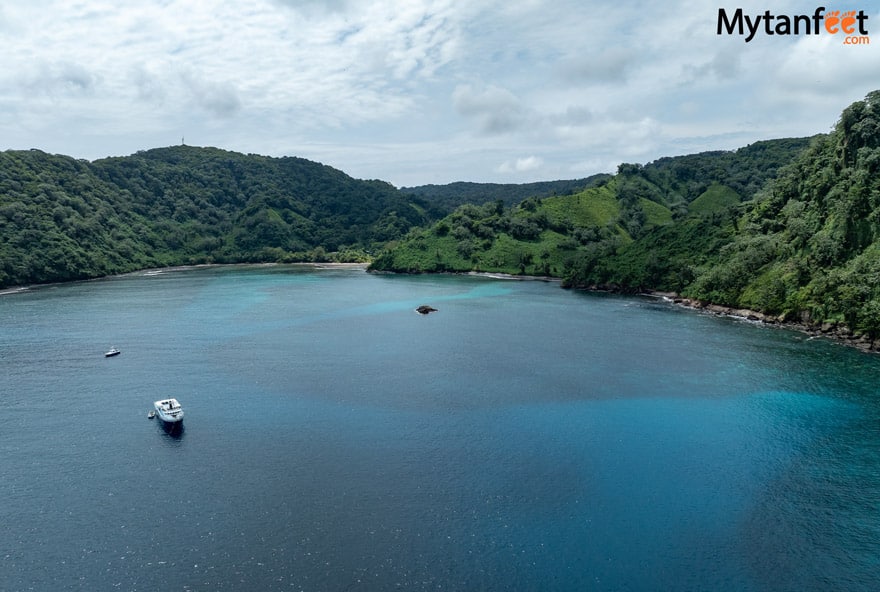
But the harrowing journey will be 100% worth it, as this island is home to the highest density of apex predators in the Eastern Topical Pacific, namely sharks.
You may see scalloped hammerhead sharks, giant oceanic manta rays, whale sharks, Galapagos sharks, Blacktip sharks, eagle rays, yellowfin tuna, tiger sharks, whitetip sharks, giant eels, golden eels, snappers, silvertip sharks, silkies sharks, bigeye jacks, grunts, and marble rays.
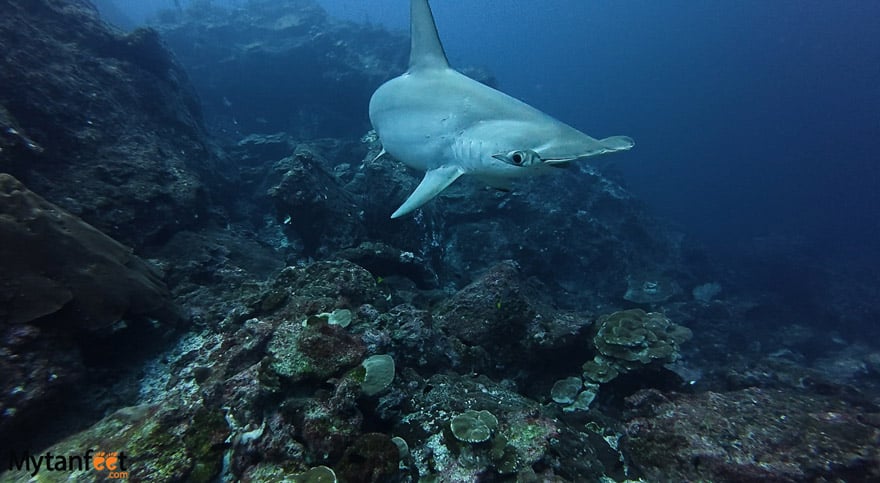
Large numbers of schooling sharks and huge baitballs are always the highlight of a Cocos Island liveaboard.
Cocos Island has the best scuba diving in Costa Rica with excellent year round conditions. Average of 19-21 meter visibility and 80° F (26° C) water temperatures.
Advanced divers only, recommended minimum 50 dives with nitrox. 8-11 day expeditions with up to 3-4 dives per day.
Be prepared for a rocky boat ride to the island, especially during the rainy season. Motion sickness medicine will be required!
Isla del Caño (Uvita)
Caño Island is Costa Rica’s second best scuba diving site and requires only a 1.5 hour boat ride from Uvita, or 45 minute boat ride from Drake Bay.
This biological reserve protects and is home to a plethora of marine life, and luckily, offers wonderful visibility, up to 30 meters (100 ft) at its best.
Common wildlife to see are turtles (green and hawksbill), barracudas, jacks, grunts, whale sharks, dolphins, mantas, and tons of smaller macrolife.
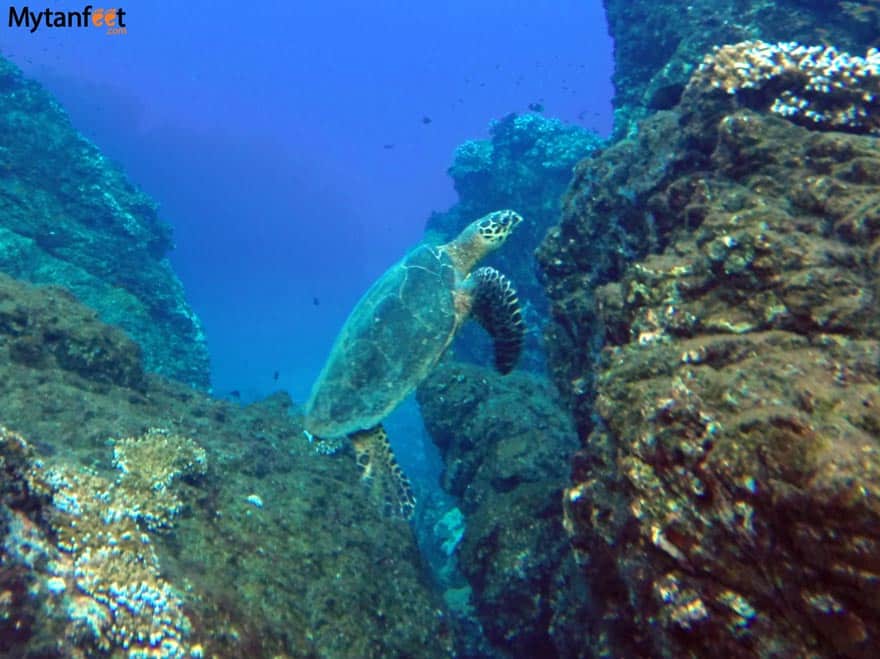
Best time to dive at Caño Island is December through May.
Best time to see mantas is February to May, humpback whales are December to mid March and August and September.
Enjoy the warm waters, with average temperatures of 83° F (28° C)!
The best place to base yourself to dive at Caño Island is Uvita or Drake Bay. It is also possible from Manuel Antonio, though a longer journey by land will be required.
We highly recommend to stay a few days, because most likely, you will want to book multiple diving days at the biological island reserve.
Snorkeling: Have someone in your group that prefers to snorkel? Book the Caño Island snorkeling tour! Unfortunately, snorkel and scuba diving tours do not go together in one group.
Bat Islands (Islas Murcielagos) in Guanacaste
Located in Santa Rosa National Park. These islands are about a 1-2 hour boat ride from Playas del Coco.
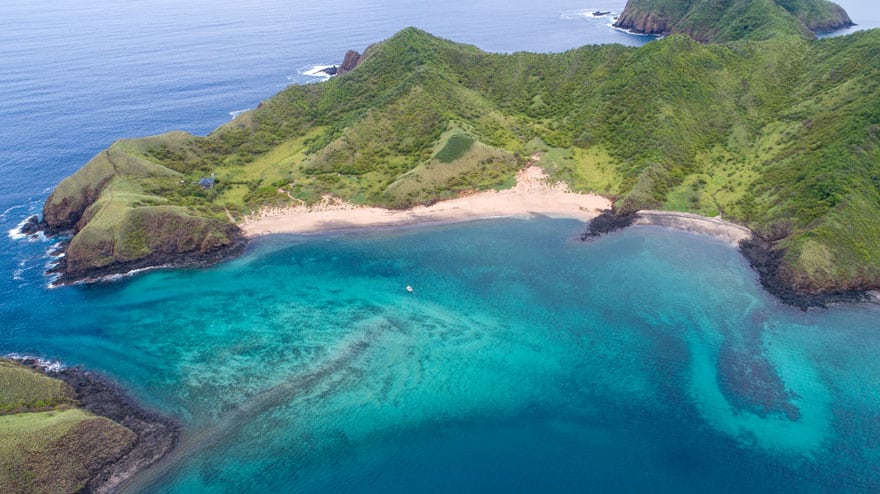
Season: May to November for bull sharks.
4 dive sites: Los Arcos, Punta Oeste, Gran Susto and Bajo Negro.
The most attractive dive site is the Gran Susto, which is home to a sizeable bull shark population. Max depth 115 ft/35 m – advanced with nitrox and dive computer required.
Scuba dive trips usually include 3 immersions.
Best towns to stay in: Playas del Coco or Playa Ocotal. Boats normally depart from Coco.
Bat Islands Snorkeling
The main island, Isla San Jose has excellent snorkeling with clear and warm waters.
Hire a private boat charter to spend the day enjoying the gorgeous clear waters of Isla San Jose and snorkel with fish, turtles and mantas.
Want to book a Bat Islands private boat charter? Contact us for quotes and information!
Catalina Islands in Guanacaste
This is where I did my discovery and PADI open water certification. The Catalina Islands are a 30 minute boat ride from Flamingo beach.
Excellent for Giant Pacific mantas (Dec – April with Feb and March as peak months). Best months for visibility are April through July.
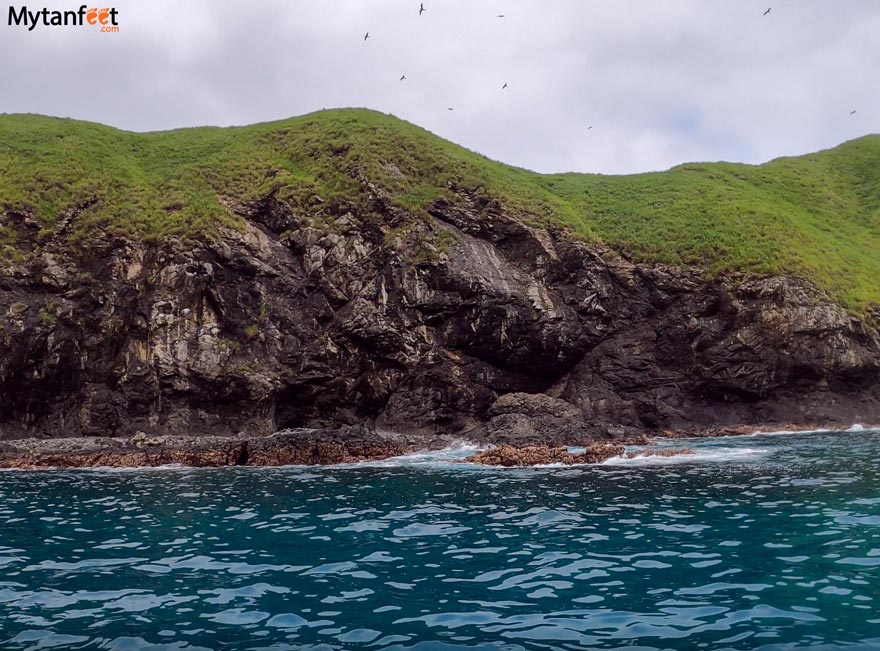
Other wildlife that can be seen are turtle, whitetip reef sharks, rays, octupus, and schools of fish. Humpback whales can be heard in the peak months of August and beginning of September!
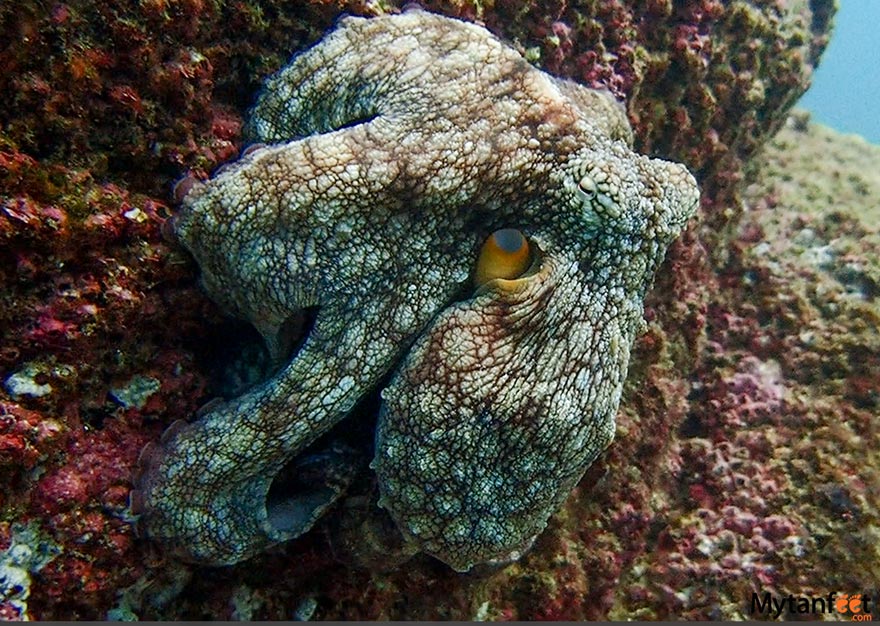
Most trips are 2 tank immersions in the morning, chosen out of 4-5 different dive sites depending on conditions.
Book your Catalina Islands scuba diving here! We offer Discovery and Certified Dives.
Best town to stay in for the Catalina Islands scuba diving: Flamingo (closest), Tamarindo, Brasilito, Potrero, Conchal, Las Catalinas, Playa Grande
Playas del Coco (Gulf of Papagayo) in Guanacaste
The Gulf of Papagayo’s nutrient dense waters and various bays and jutting outlets offer a plethora of excellent dive sites for all skill levels.
Popular dive sites are Monkey Head and Islas Pelonas.
Best beach town to stay in is Playas del Coco or Playa Ocotal. If you have a car, Playa Hermosa GTE and Playa Panama are within a 10 min driving distance to Coco, where most dive shops are located.
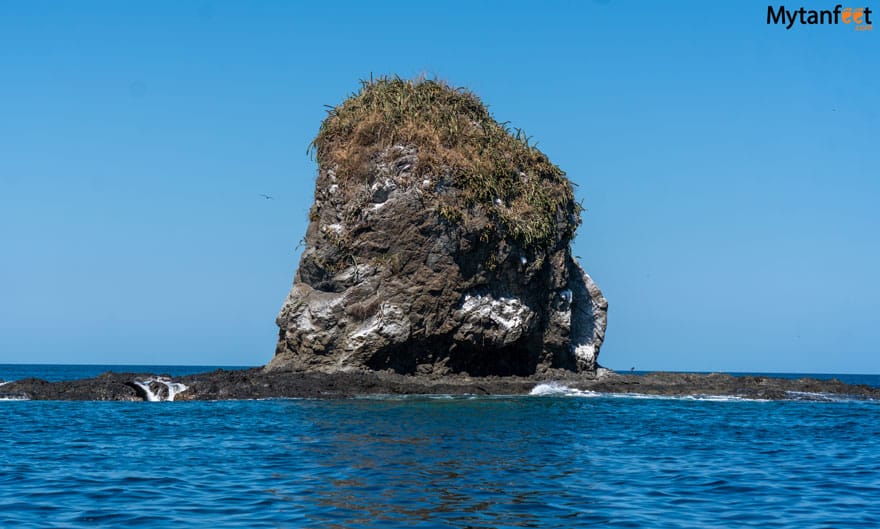
Visibility can vary widely throughout the year, from 5-30 meters. When it’s good, it’s GOOD. But when it’s not, it can be fairly disappointing.
Visibility is usually best from May to November.
Popular wildlife to see are whitetip reef sharks, eagle rays, sea turtles, schools of fish, devil rays.
During peak turtle nesting season (May through December), you can see sea turtles mating in the water and even baby turtles!
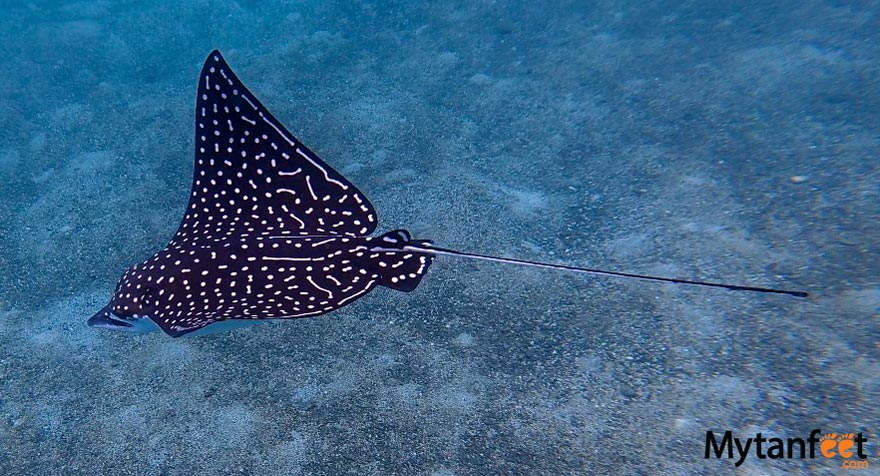
February and August are excellent months for humpback whales. Keep your eyes and ears out for them.
Average water temperatures are very nice, from 75-85° F (24° – 29° C).
Both Monkey Head and Islas Pelonas are good for experienced snorkelers. If you prefer to snorkel, book a private boat tour to snorkel at these islands.
Book your private snorkeling tour from Playas del Coco here!
The normal shared catamaran sailing tours or shared snorkel tours do not go to those spots for snorkeling, they go to a shallow beach. Only private boat tours can take you to Monkey Head or Islas Pelonas to snorkel.
Samara (Guanacaste)
The dive sites around Samara are not quite as high in pelagics as the Gulf of Papagayo, but there are some lovely dive sites for coral beds and pinnacles for all levels, particularly beginners.
Popular dive sites are Punta Manta, Buena Vista Pinnacle, Barco Quebrado and Isla Chora Pinnacles.
Common wildlife to see are reef sharks, turtles, rays, snappers, octupus and reef fish.
Nosara (Garza)
The highlight of the Garza area is the that there are dozens of unique dive sites with thriving coral life, particularly the sea fans. Currents can be strong in this area, as many dive sites sit in the open ocean.
Visibility is extremely variable, with a max of only about 10-12 meters though. Best time to dive in the Garza dive sites is December through February and June through August.
Thanks to its close proximity to Ostional Wildlife Refuge, home to one of the seven beaches that experience mass turtle nestings, turtles can commonly be seen during May through December.
Popular dive sites are Ojala, Barco Escondido and Ricky.
Stay in Nosara for the closest proximity.
Santa Teresa (Nicoya Peninsula)
Though not as popular as surfing, scuba diving in the Nicoya Peninsula is growing.
Popular dive sites are Cadena, Tortilla and Tiburon on the Santa Teresa side.
Near Montezuma and Tambor, Los Muertos, Punta Langosta and Chancha are popular dive sites.
Islas Tortugas
In the Gulf of Nicoya lays Islas Tortugas, made up of a couple large islands, accompanied by smaller surrounding islets.
Visibility is not always great in this area, so be aware before booking. It is recommended to wait until you arrive to see how conditions are. Expect at best, 10-15 meters (30-50 feet).
One of the most interesting dive sites is Franklin Chang, a 95 ft US Coast Guard Boat purposefully sunk in 2000 to create an artificial reef. This is a great wreck dive in Costa Rica, as there are not many.
Wildlife that can be seen are seahorses (February to April), frogfish, eels, whitetip reef sharks, turtles and fish.
Dive shops in Jaco, Herradura (Punta Leona) and Santa Teresa run dive tours to Islas Tortugas.
Manuel Antonio/Quepos
Snorkeling in Manuel Antonio is not great, but scuba diving is quite opposite!
The Manuel Antonio dive sites are known for soft coral gardens, turtles, massive schools of fish and volcanic rocky reefs.
Common to see eels, reef fish, butterfly fish, angelfish, purferfish, sea stars and whipte tip reef sharks.
Best time for visibility is the dry season, December through March.
One of the best things about scuba diving in Manuel Antonio / Quepos is that boat travel times from the dock are short – only about 10 minutes.
Stay in Manuel Antonio or Quepos, which is where the boats depart from (Marina Pez vela area).
Caribbean (Limon, Puerto Viejo de Talamanca)
Scuba diving is only possbile in the Southern Caribbean coast. The Northern Caribbean (Tortuguero, Parismina) are not suitable to diving due to the extremely murky brackish waters.
Though the Caribbean coast only has a few dive sites, what they lack in quantity, they make up for in quantity…but only when conditions are favorable. Which can be tricky, as the Caribbean climate tends to be rainier and stormier than the rest of the country.
There are very few dive shops in the area, and no PADI dive shops.
The main dive sites are Isla Uvita and Isla de los Pajaros out of Limon, where there are protected coral reefs but visibility can be really iffy.
Punta Uva, Punta Manzanillo and Punta Mona are the other dive sites with possibilities to see sharks, tropical fish and corals.
Tip: Don’t go to Puerto Viejo/Limon with the goal to dive. If weather works out and diving is possible during your time there, consider it a huge plus.
Snorkeling in Puerto Viejo is a better option, especially in Cahuita National Park.
Costa Rica Scuba Diving Do You Need to Be Certified?
You do not need to be certified to go scuba diving in Costa Rica.
All scuba diving companies in Costa Rica offer a “discovery dive” which is specifically for people who don’t have their certification.
You will do a 1 hour pool instruction on basic skills and getting comfortable with buoyancy and your gear, before heading out to do a 2 tank dive, with a max depth of 12 meters/ 40 feet
My Discovery Dive Experience
I did a discovery dive at Catalina Islands, in Flamingo. My instructor was awesome! I felt very comfortable and confident during our lesson.
While diving, the team took great care of us, checking all our equipment and making sure we were OK. We just focused on swimming and enjoying the underwater world.
The water clarity was decent for being end of August. We saw an eagle ray, sea stars, eels, octupuses, white tip reef sharks, nudibranchs and big schools of fish.
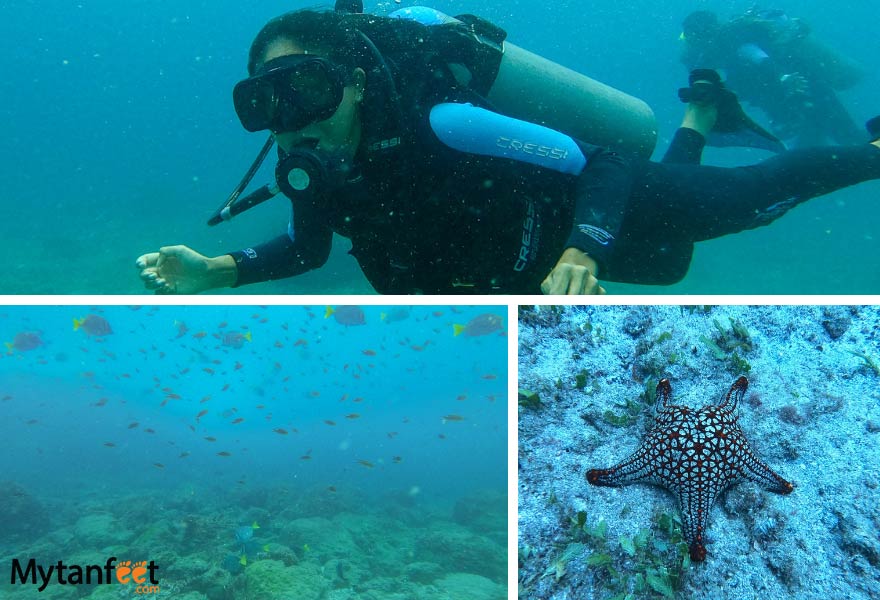
Underwater, we could hear humpback whales singing, as August is the peak month to see them in this area.
As the Catalina Islands are a 30 minute boat ride from Flamingo beach, we had plenty of time to chill and relax after the dive. On the way back, we saw dolphins and humpback whales breaching!
Book your Catalina Islands scuba diving tour in the link! Discovery and certified dives available and transportation from Tamarindo, Conchal and Flamingo can be added.
Personal recommendation: Please use reef safe sunscreen while snorkeling/scuba diving. We only use Stream2Sea when we are in the ocean.
Costa Rica Vacation Checklist
- First time to Costa Rica? Read our First Time in Costa Rica guide.
- Not sure how to move around Costa Rica? Read our How to Get Around Costa Rica guide to find the best transportation method for you.
- Click the link to get our detailed Costa Rica Packing List so you know what essential items to bring.
- Check our Costa Rica destinations map and Costa Rica restaurant map
- Do not forget to purchase Travel Insurance for your trip to Costa Rica.
- Stay connected by purchasing a prepaid SIM Card in Costa Rica. Get 10% off your Airalo eSIM package with our promo code “mytanfeet”
- Save money with Mytanfeet Deals for tours and hotels and our Costa Rica Car Rental Discount.
Federico Schiavio says
Hi! Can a 5 and 8 year old snorkel? I’m guessing yes. And the min. age for scuba diving is 10?
Thanks,
Fed
Sammi says
Hi Fed, it will depend on which company you go with as each has their own regulations and equipment but generally kids can snorkel no problem
Justine Donnelly says
Hi Sammi
I am planning to visit Costa Rica this August with my husband and 4 boys ages 13-20. We are interested in doing a discovery dive like the one you did from playa Flamingo. Can you tell me the price per person? None of us has experience of diving but you say in your blog it is not needed, is that right? We have found your blog very helpful in planning the trip by the way. I did live in CR but a long time ago in the 1990’s and much has changed!
Sammi says
Hi Justine, you can fill out the booking form below this post, when you select your activity, prices and a description will appear (you will want to pick Discovery dive for non certified people)
Diana says
Hi Sammi,
Love your Blogs. You guys were so great with helping us book our rental vans. Thank you so much for that. We are now checking to see what is the best place to go snorkeling/snuba diving/scuba diving. We are staying at Hacienda Latica in Los Pagos. We are a group of 18 – two out of the group are PADI certified. I’m thinking snuba diving and snorkeling for the rest of the group. Do you know if my mom can stay on the boat? She’s 90 so she will not want to go snorkeling but would love to be out on the water with the rest of us. I know you might not be able to answer some of these questions, but can you point us in the direction of who we should talk to or book through? I looked at the sites you mentioned in your blog, but it says they might be expanding to take 8 people out on boats, as I mentioned would be at least 17.
Thanks and I look forward to hearing from you.
Diana
Sammi says
Hello Diana, I just sent you an email 🙂
Ryan Elfallah says
First time going scuba diving in Costa Rica and hopefully trying to visit bat island Nov 7th! I really hope the conditions don’t cancel the trip as it’s really cloudy and rainy here in Arenal
Sammi says
I might postpone just for the hurricane and storms that are passing through :/ I’d definitely double check with the shop. Hope you are able to go soon if not this weekend!