
If you love coffee, then you must try Costa Rican coffee.
Costa Rica is known for producing some of the most high quality coffee in the world and is a favorite among the best baristas in the world.
We’ll talk about the best Costa Rica coffee tours and best Costa Rican coffee to buy to bring back home.
This post has affiliate links which we may earn a small commission from if you choose to purchase, at no extra cost to you. Listed prices are quoted in USD and are estimates. More info: Disclosure
Costa Rican Coffee History
Coffee was brought to Costa Rica in the 18th century.
Due to Costa Rica’s ideal climate and elevation in the mountains, coffee became one of their largest exports and an important part of the Costa Rican economy. It was also the first country in Central America to produce coffee.
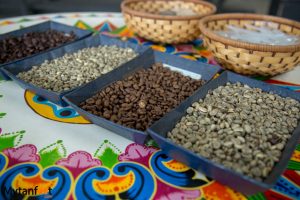
Many of the old families in the Central Valley became wealthy through coffee.
Although Costa Rica produces around 1% of the world’s coffee production, the coffee quality is exceptionally high.
Costa Rica’s coffee has won plenty of international contests and certifications. Award winning baristas have used Costa Rican coffee, saying it’s the best in the world.
Then, in 1989, it was prohibited by law to cultivate the Robusta coffee due the poor quality. The government only allowed the production of Arabica Coffee, which is the highest quality coffee.
Coffee Growing in Costa Rica
More than 80% of Costa Rica’s coffee plantations are located between 800 meters and 1600 meters altitude (2624 – 5249 feet), planted with fertile volcanic grounds and grown in temperatures between 17 to 28° C (62-82° F).
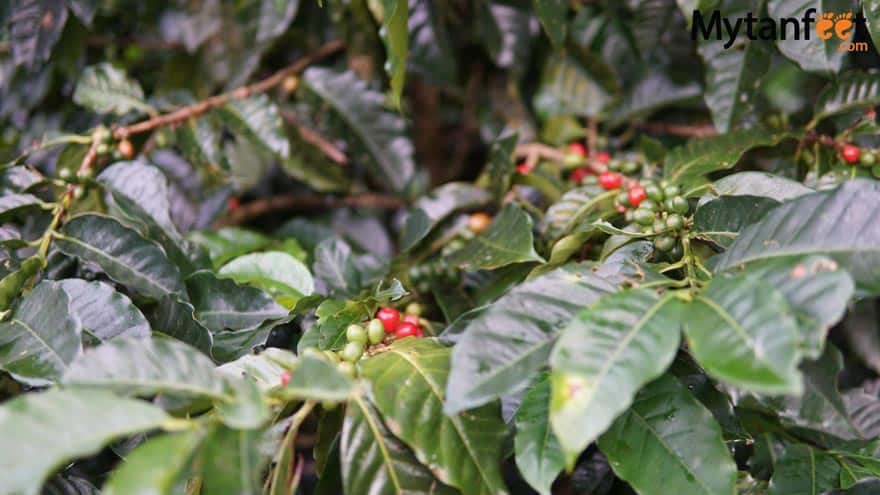
This is the perfect environment to produce coffee. Coffee plants do not like extremely hot weather and they thrive in a higher altitude.
This is why you will not find coffee plantations in coastal areas as it’s too hot and flat. These areas do not produce high quality coffee.
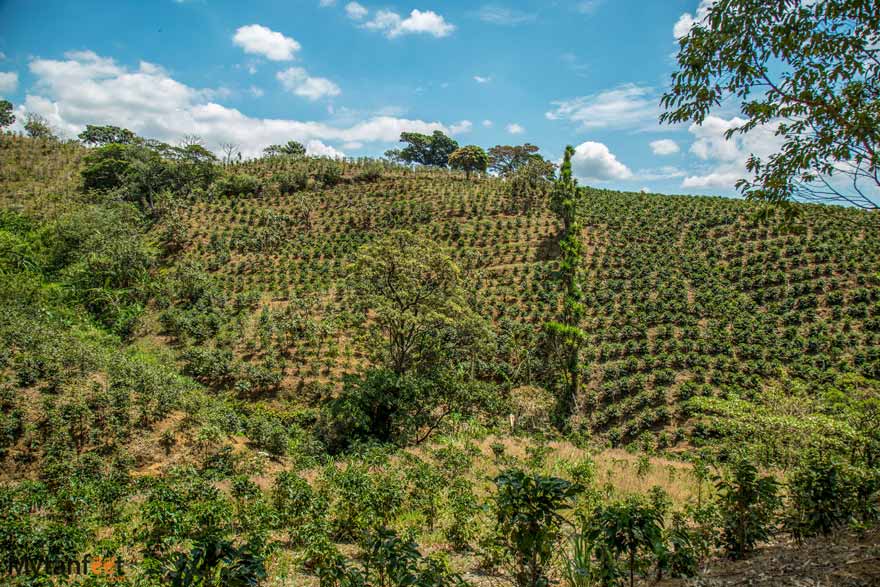
The best places to grow and produce coffee in Costa Rica is the Central Valley, namely the mountainous areas of San Jose, Cartago, Alajuela, Grecia, Heredia.
Coffee also grows well in Monteverde. Lately, the winning coffee has been grown in Monteverde and Zona de los Santos (San Jose).
Costa Rica Coffee Tours
If you want to learn about Costa Rican coffee, then you must take a coffee tour at a beneficio, or a coffee plantation.
On a Costa Rica coffee tour, you will see what the coffee plant looks like, the coffee cherries, how they pick and peel them to get the bean, how they separate the quality of beans and how that cherry turns into what we know as coffee we buy in the supermarket.
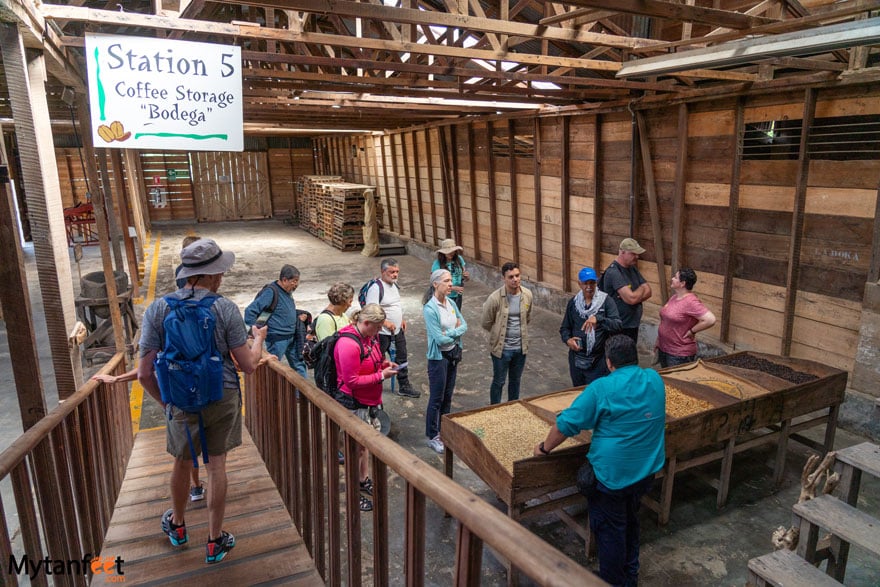
You’ll see how that particular plantation processes their coffee, such as the drying and washing process and roasting.
But something all coffee plantations have in common are that the coffee cherries are picked by hand. This unique feature sets Costa Rican coffee apart from other countries that produce coffee, such as Vietnam, Colombia and Brazil which uses machines.
And of course – you get to try delicious coffee!
The Best Costa Rica Coffee Tours
The best places for coffee tours in Costa Rica are San Jose (province) Heredia (province), Alajuela (province), Naranjo, Cartago (province) and Monteverde (canton).
These places grow what they call first grade coffee.
Central Valley (San Jose, Heredia, Alajuela and Cartago)
Doka Estate Coffee Tour in Alajuela is a popular one for tours, since they have a huge plantation with a small museum, restaurant, roaster and store. Doka is one of the oldest coffee plantations in Costa Rica.
We partner with a tour company in San Jose that runs day trips to Doka Coffee Estate. They combine a visit to Doka with Poas Volcano and/or La Paz. Check out our San Jose tours booking page and request to book the tours with our discount!
Cafe Britt in Heredia is great for families with kids or the casual drinker. Cafe Britt is a coffee roaster, buying coffee from various plantations throughout the country and roasting their own.
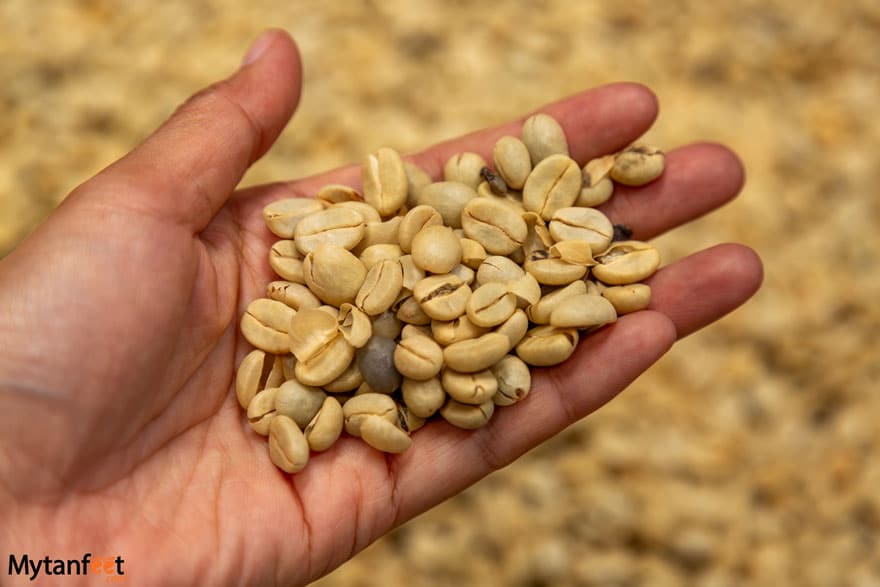
Golden Bean in Turrialba was very fun to see a small, sustainable, organic coffee farm. Aquiares is another coffee farm in Turrialba, one of the oldest in Costa Rica, near Turrialbva Volcano.
Finca Rosa Blanca is actually a high end hotel and a coffee farm. When we stayed at the hotel, we took a coffee tour which was really interesting as it included a tasting.
We loved all of them and even though they were all about coffee, each one was unique and different in their operation.

Espiritu Santo in Naranjo, Coopedota in San Dota and Finca Rosa Blanca in Heredia are some other great ones.
Starbucks owns their own coffee plantation called Hacienda Alsacia in Alajuela that offers tours.
La Fortuna
Although La Fortuna doesn’t grow first quality coffee as it’s not located in the ideal climate nor elevation, coffee tours are a popular activity.
In La Fortuna, it is small, local family owned farms that produce coffee for usually their own personal consumption, and not exportation.
We really enjoyed the La Fortuna coffee tour we did with a small local family. Some coffee tours combine coffee and chocolate, since cacao grows very well in La Fortuna.
Monteverde
Monteverde products fantastic coffee, as it’s high in elevation with an ideal climate in the mountains.
Don Juan, San Luis and El Trapiche in Monteverde are great coffee tours. Cafe Monteverde also offers one and I absolutely love their coffee.
Guanacaste Coast
If you are staying on the Guanacaste coast, full coffee tours are not readily available. The Guanacaste coast is not a good place to grow coffee since it’s too hot and is at sea level.
However, there are a few places that offer coffee presentations so you can at least get a basic introduction to Costa Rican coffee.
Tio Leo in Liberia offers coffee presentations, showing the roasting process, plant and harvest. Sun Burst in Liberia is a coffee roastery and sometimes offers roasting presentations.
Buena Vista Lodge up near Rincon de la Vieja has their own small coffee station.
The Diria Coffee Tour in Hojancha offers tours to their small coffee farm to see the plant, growing, collection, harvesting and production process.
If you are staying in Playas del Coco, Playa Hermosa, Playa Panama and nearby beaches, this Guanacaste coffee tour is a great cultural experience.
Best Time for Coffee Tours
The best time to take a Costa Rica coffee tour is around December – February as this is their production and harvest season. You will be able to see the whole process in action.
These months due vary depending on the plantation.
If you aren’t visiting Costa Rica during that time, you can still take a coffee tour. You won’t see the freshly picked cherries or the plantation in full operation, but it’s still super interesting.
Costa Rica Coffee Brands and Souvenirs
Coffee is one of the best Costa Rican souvenirs. Definitely bring some back if you love coffee!
Nowadays, you can find more specialty coffee brands and export quality coffee at the supermarket. So in case you aren’t able to take a coffee tour, you can still buy good coffee from the grocery store.
You need to look on the label for “calidad de exportacion” which means export quality coffee.

You can also buy coffee from coffee shops. More gourmet coffee shops are popping up in Costa Rica.
We like Perro Barista in La Fortuna and they sell Bocanegra coffee.
Another excellent gourmet coffee brand is Papá Amadeo Café. Their main shop is on Ruta 2, between San Jose and Cartago. We found their coffee at Cacao Kalli & Coffee in Katira.
Costa Rican Chorreadors, the Traditional Coffee Maker
Another interesting thing about Costa Rican coffee is how the locals make it. Traditionally, Costa Ricans use a chorreador, which is the traditional coffee maker.
A chorreador is essentially a wooden stand and they use a cloth “sock” as a filter. The “sock” retains more flavor and doesn’t taste plastic-y.

For souvenirs, a chorreador makes a great gift. You can buy a hand painted chorreador for about 10,000-20,000 CRC ($20-40) USD at any souvenir store.
Buying Costa Rican Coffee Online
Some coffee plantations have started selling coffee on their website.
Doka Coffee Estate, Aquiares, Cafe Monteverde and Cafe Britt sell coffee online and ship worldwide.
Read more about Costa Rican food and drink below!
Traditional dishes of Costa Rica
Costa Rica Vacation Checklist
- First time to Costa Rica? Read our First Time in Costa Rica guide.
- Read our How to Get Around Costa Rica guide to find the best transportation method for you.
- Get our detailed Costa Rica Packing List and check our Mytanfeet Amazon storefront for our personal recommendations.
- Check our Costa Rica destinations map and Costa Rica restaurant map
- Do not forget to purchase Travel Insurance for your trip to Costa Rica!
- Stay connected by buying a prepaid SIM Card in Costa Rica.Get 10% off your Airaloe SIM package with our promo code “mytanfeet”
- Save money with Mytanfeet Deals and get our Costa Rica Car Rental Discount.
Tracy Riddell says
The Diria coffee tour in Hojancha Guanacaste is very good.
Jeana Huynh says
Which supermarket would you recommend getting the coffee that you suggest at the best price? Super Cristian, maxi Pali, Walmart?
Sammi says
Actually Walmart is not bad and they also had one that I really liked that I haven’t seen in other markets, I think it was from CoopeDota, like a shiny red bag. Walmart also has more selection than Maxi Pali and Super Christian.
Hope says
We stayed in the dominical area of Costa Rica and found the best coffee tour we’ve ever been on… It’s the café Don Emilio tour. Family owned, you go through the whole process and then you get to try coffee and banana bread and for $10 extra they will make you lunch. Strongly recommend. It takes effort to get there but totally worth it.
Daniel says
Are there any coffee tours closer to the south pacific side (from Dominican for example). I found a little info about Santa Maria de Dota Coffee Plantation, but can’t find specific details
Sammi says
There is Coopedota that is very good