
He’s kind of the pet of the Jaguar Rescue Center. My guide pointed to the pelican that was strutting around in the corner. What happened to him? I asked.
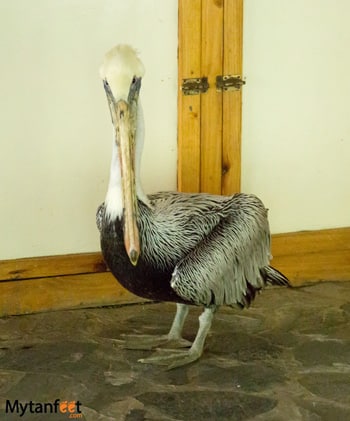
His wing, he pointed out. I focused my gaze on the pelican’s wing and it did fold funny, kind of like when I tried to do origami as a kid and the corners never seemed to line up correctly.
Pistachio caught my eye and shook his whole body as if to show off. He’s the boss around here our guide said with a laugh.
Giving a loud squack, Pistachio then proceeded to pose handsomely as visitors started snapping his picture. He was the boss for sure!
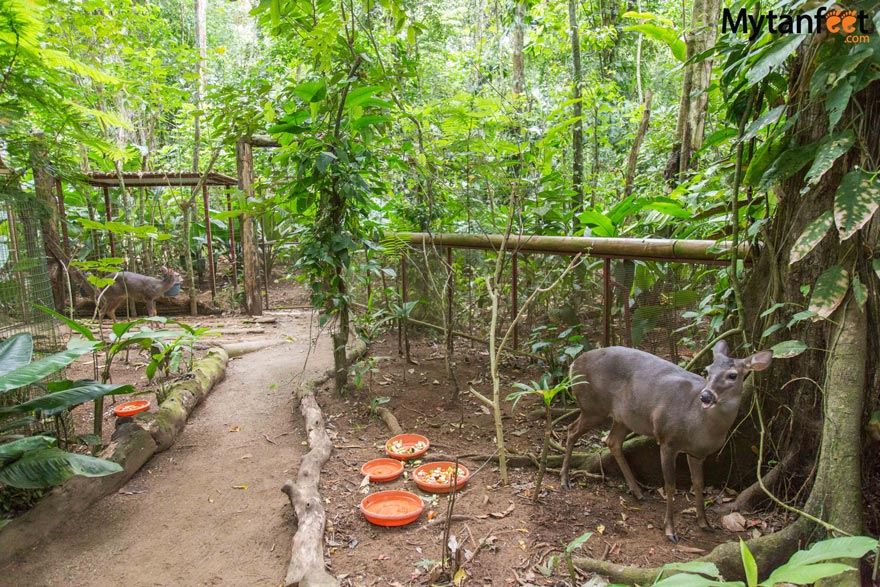
This was the first animal we saw at the Jaguar Rescue Center in Puerto Viejo and I have to say, Pistachio was an excellent door greeter and made all the kids squeal. But his spotlight was quickly stolen by a deer and peccary that showed up quietly behind us. The peccary walked around us, almost stepping on my foot and nuzzled his nose up against our guide as if he wanted some cuddles!
At this point, I have to admit it almost felt like a zoo. Almost. But I knew it wasn’t. The Jaguar Rescue Center is the exact opposite – a rescue center and one of the best in Costa Rica.
If you love animals and want to learn more about wildlife in Costa Rica, then you have to go to the Jaguar Rescue Center. They’ve been rescuing and rehabilitating animals since 2008, working hard to help the injured animals in Puerto Viejo.
Jaguar Rescue Center Tour
Entrance Fee and Hours
Visitors can take a tour of the center to learn more about their mission and philosophy. Jaguar Rescue Center has open tours Monday – Saturday at 9:30 AM and 11:30 AM. It is around 2 hours and the rescue center fee is $25 USD per person. Children under 10 are free. You need to arrive 15 minutes before the tour starts to pay and get checked in.
There were a good amount of people when we visited (around 50) and the tours are split up by language (French, Dutch and German available by request). They also offer private tours with reservations.
We went to Jaguar Rescue Center as part of the tour. The tour was Jaguar Rescue Center + Punta Uva and they took care of the entrance fee and transportation for us.
Location
The center is in the Playa Chiquita area It’s about 5 kilometers from Puerto Viejo downtown so you can ride a bike or take the bus from Puerto Viejo to Manzanillo and get off at Chiquita.
The Tour
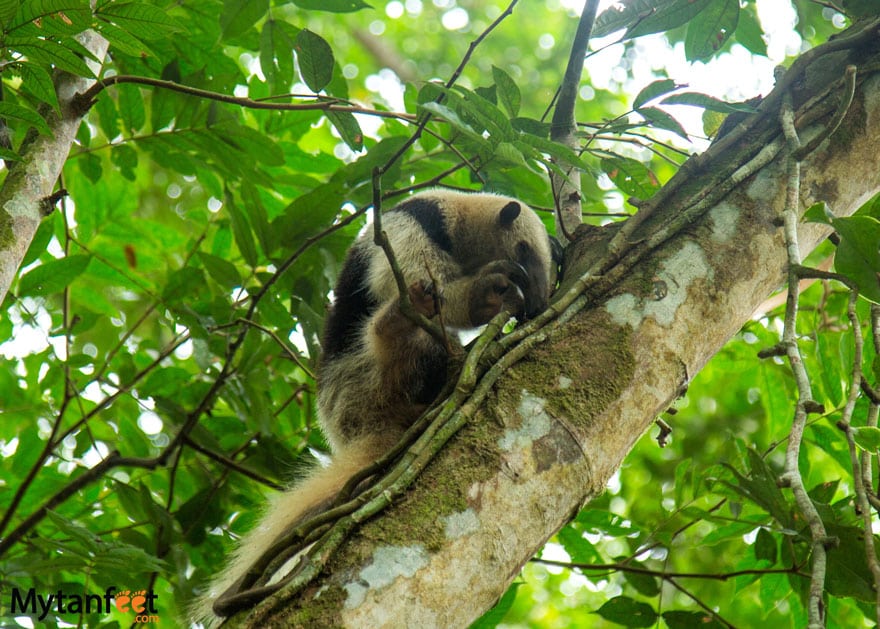
The tour goes throughout the center at each station with our guide sharing the back story of each animal: how they found them, their injuries and their progress. We met a juvenile anteater, baby howler monkeys, sloths, toucans, owls and more, each with their own unique story. Though their goal is to release as many animals back into the wild, some simply cannot, such as Chanchita.
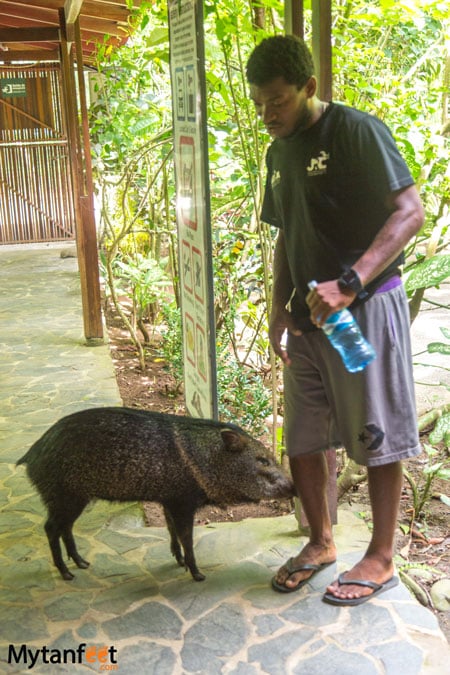
Chanchita is a peccary who won’t be released back in the wild. Peccaries are very social animals that travel in large groups and families but they were worried if they released her, she might get hunted by humans since she is very used to people now.
And she’s OK with that as she’s another boss at Jaguar Rescue Center!
We also got to see the highlight of the Jaguar Rescue Center: the sloths. They have separate sections for the sloths built specifically to fit their needs when they’re babies, juveniles and adults.
They have a sloth garden, trees and enclosures. We didn’t see any babies, we saw mostly adult sloths sleeping and eating and only two-fingered sloths.
I found it interesting that there must have been at least 10-20 two-fingered sloths but no three-fingered sloths.
I have heard that it is easier to have two-fingered sloths in captivity and to treat them, since they have a more diverse diet whereas the three-fingered sloths have a stricter diet.
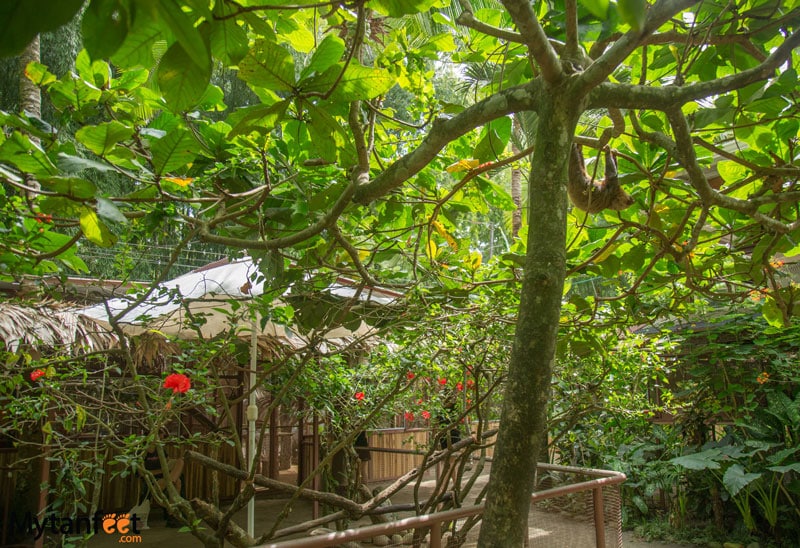
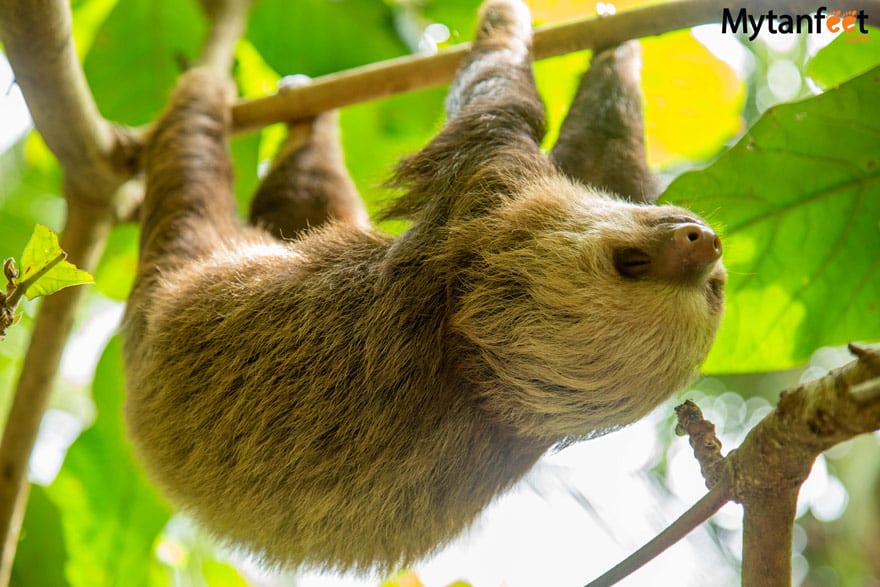
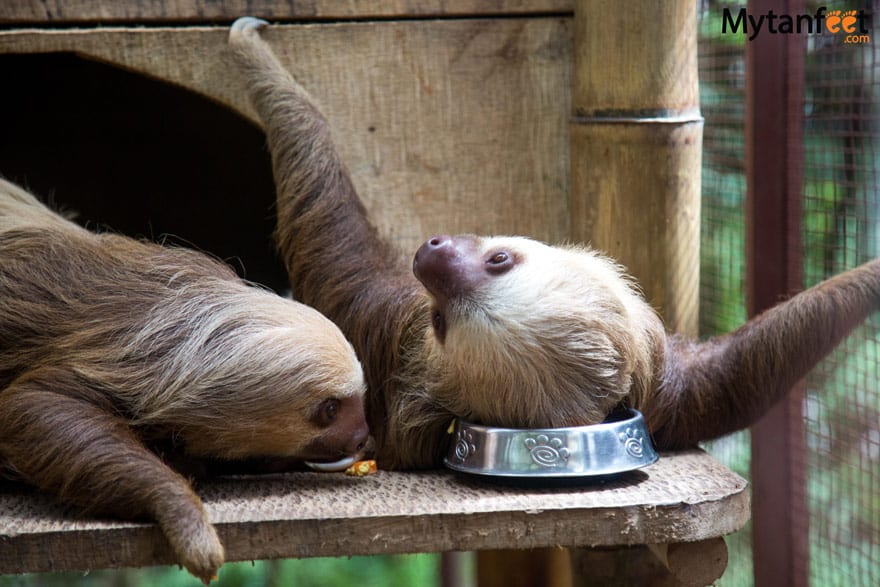
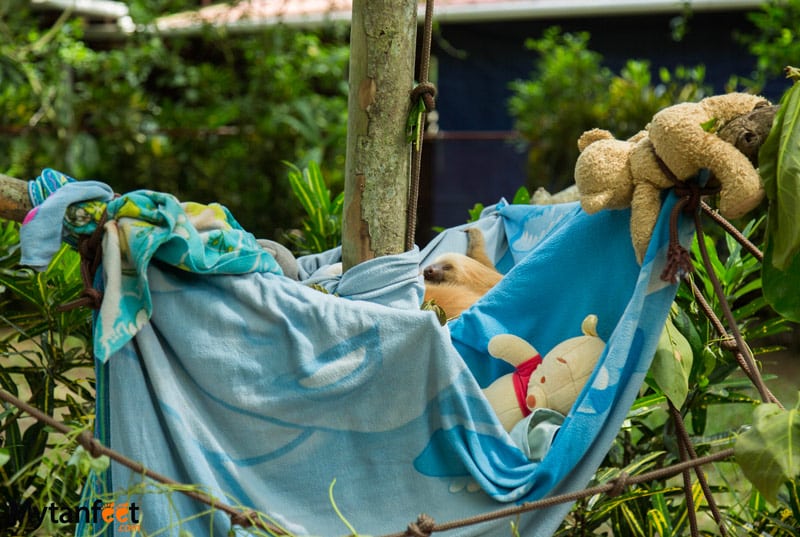
We didn’t get to hear too much of the backstory on the sloths but I’m not surprised they had so many. It’s very common for sloths to get injured from walking on power lines or getting hit by cars in Puerto Viejo.
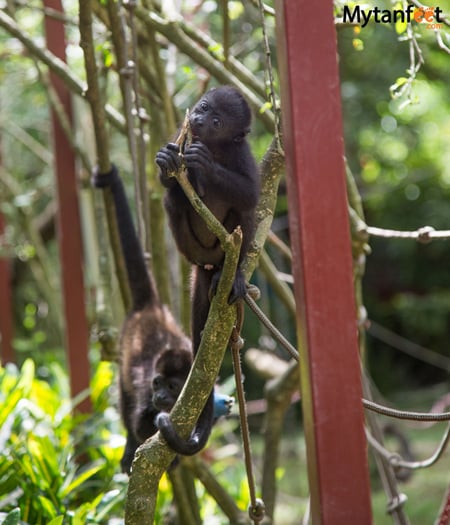
We then got to meet a couple of mischievous baby howler monkeys.
The sloth and monkey section had volunteers who had the difficult job of watching the animals, at least the lady who had to watch the monkeys.
The sloths are easy to watch but those babies were jumping everywhere and she had to go chase them down a couple of times!
The center doesn’t allow any guests to hold or touch the animals which I appreciated. They want to do everything they can to rehabilitate the animals so they can successfully go back to the wild if their health is good and they have the skills.
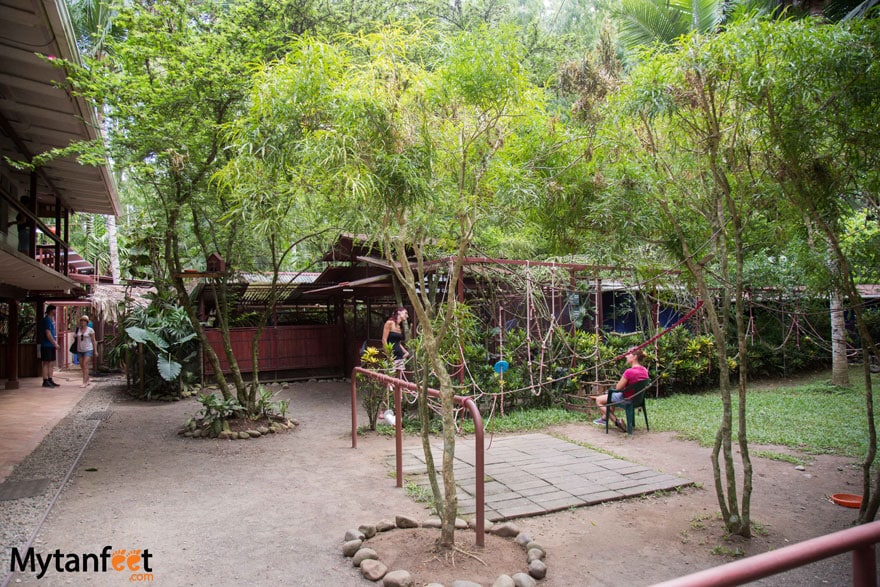
Here are some more pictures of the animals we saw and of the center. They’re currently expanding it to build more enclosures for the animals because they receive from 500-700 animals every year!
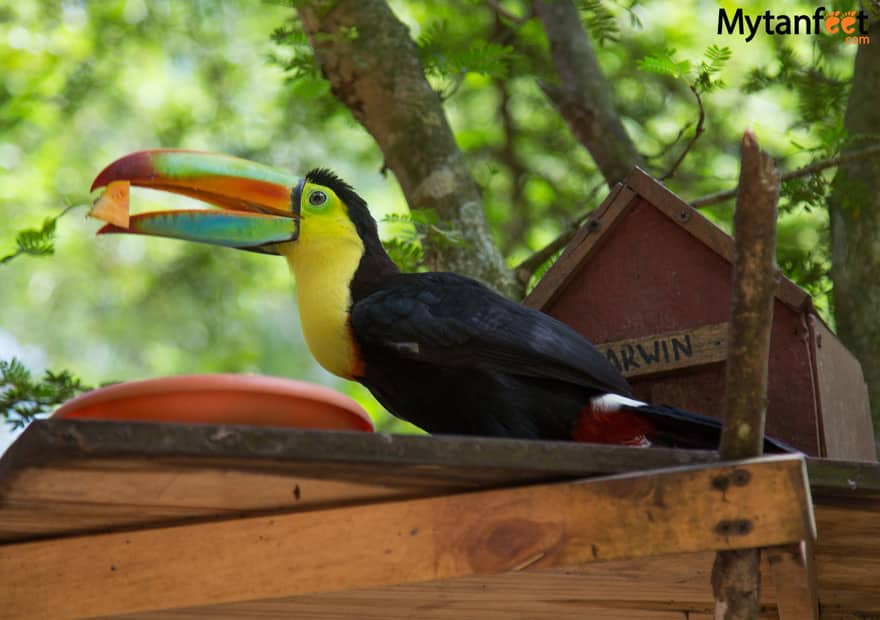
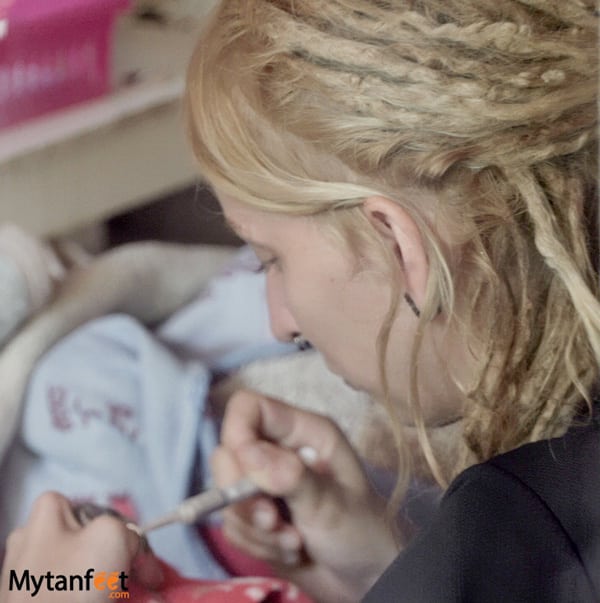
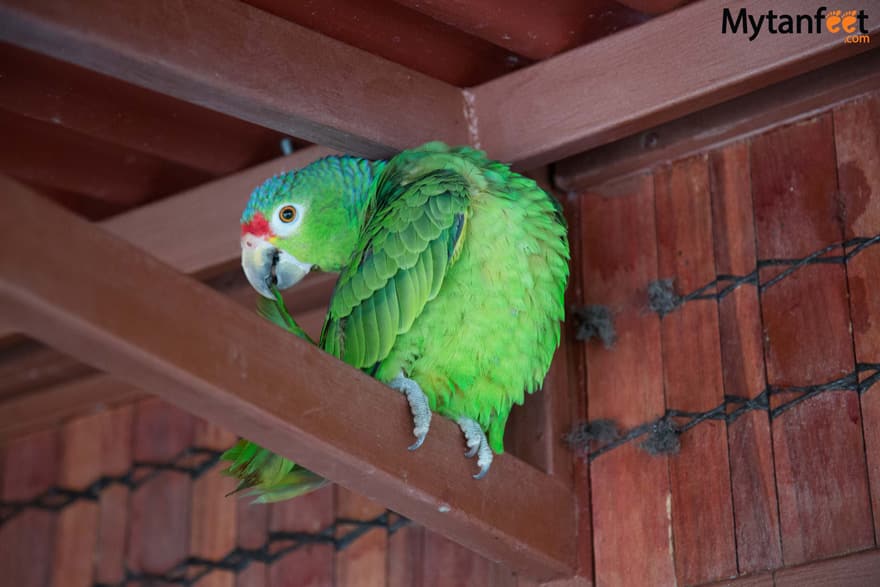
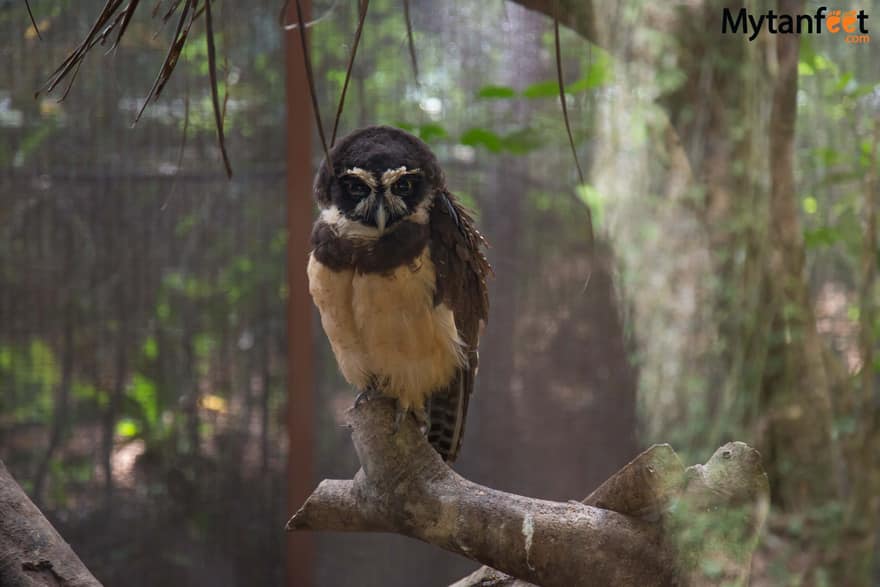
They also have an area for snakes. This is because they receive school groups and are educating the kids about snake safety as most locals kill snakes immediately if they see one in their yard. This is actually harmful to the environment as snakes are important predators in the ecosystem so they want to educate locals on what to do when they encounter a snake instead of killing it. I thought this was wonderful since snakes are very important and sadly they have a bad reputation which leads locals to killing them all the time.
One animal you won’t see at the center: a jaguar. The center is named after the first injured animal that was brought to them, a sick baby jaguar. He didn’t survive so they named the center in his honor.
All in all, I really enjoyed our tour at Jaguar Rescue Center. They were organized, educational and fun. This is a great activity for all travelers, especially for families because it’s pertinent to educate the future generation about nature and conservation and Costa Rica is an incredible destination to do so.
Jaguar Rescue Center Private Tour
They center also runs private tours which I do recommend if you want to have more time with the animals and not be in a large group. The private tour costs $75 per person, minimum 2 people and must be reserved in advance.
Jaguar Rescue Center Night Tour
They also run night tours at La Ceiba, their second site. This is actually their release site and it is in the rain forests of Punta Uva near the Gandoca Manzanillo Wildlife Refuge.
Jaguar Rescue Center Volunteer
Dream of giving your time to help injured animals? Volunteer at the center! You need to apply on their website.
Watch our video below to see more about the center.
Read more articles about Puerto Viejo below!
Related Tips and Guides
Incredible Things to Do in Monteverde
Not sure what to do in Monteverde? Check out our list of incredible things to do in Monteverde…
Read guide
The Best La Fortuna Hot Springs
After a day hiking to waterfalls and volcanoes through the lush tropical rainforest, the best way to end…
Read guide
The Best La Fortuna Safari Float – Which One Should You Book?
One of the best tours in La Fortuna is a wildlife watching river safari float. These wildlife watching…
Read guide
Leave a comment